Written By: Brian Ocotlan-Urbano
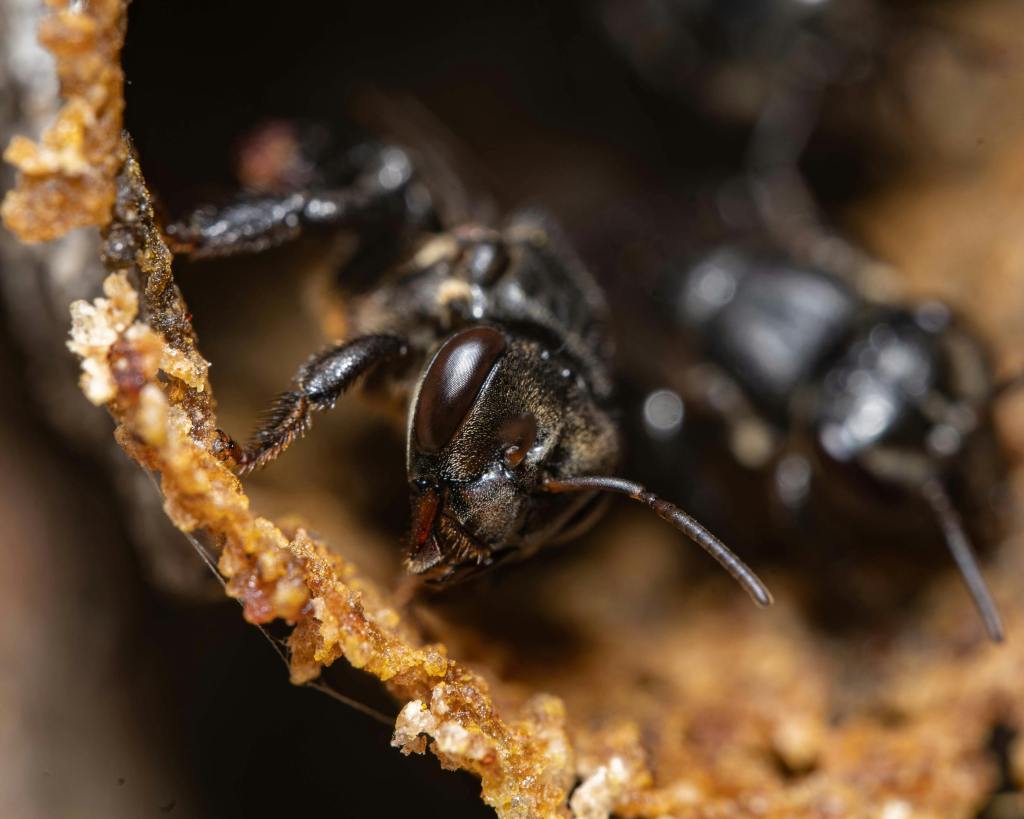
Credit: Bill Salazar via Pexels
Have you ever heard of a stingless bee? Well, even if you have or haven’t heard of these small insects in the heart of Peruvian ecosystems. They have recently gone on to win rights in the battle against industrial expansions. Their victory has sparked hope in the continuous fight against government-backed expansion into protected ecosystems. Now, whether these protections will be heavily respected by the local business-minded politicians and other parties is up for debate. Yet, let us focus deeper into how exactly this battle succeeded and how it shows support for protecting our Latin American ecosystems. Which are constantly under threat by those who promise to protect them in their legislation.
The Melipona eburnea, one of the bee species to receive the protections recently granted by the collaboration of protective agencies. It was previously highly vulnerable to the constant use of pesticides, expanded deforestation, invasive species, and habitat loss. According to Earth Law Center, one of the collaborators in this fight for the insect to be recognized and protected. The bees’ decline led to a slowed Amazon plant regeneration, weakened food security, and, culturally, the decline of Ashaninka traditional knowledge. Yes, the bees are not only environmentally important, but they are indeed culturally significant to the communities they surround. The stingless bees contribute directly to these communities as they are spiritually connected to the traditions. The Ashanika is a local community rooted in the areas of Peru’s central rainforested areas. Within their own communties the, organizations such as the Ashaninka Communal Reserve and EcoAshaninka were formed. These organizations combine the indigenous values of the bees alongside scientific advocacy for them. This relationship only sharpens the core mission, which they pushed for in the province of Satipo in Peru. This directly benefits them in recognizing the insect as an issue of the community and their need for legislation.
Parties affiliated with the collaboration: Earth Law Center, Amazon Research International, EcoAshaninka, Ashaninka Communal Reserve, Bee: wild, Municipal Council of Satipo,
The ordinance created, which grants these insects their rights and recognition by the local government. To begin, Is historic as it recognizes them and their ecosystems as a body. The ordinance does not recognize them as a resource to be managed. According to Municipalidad Provincial de Peru, under the ordinance, the bees are entitled to: their existence and expansion, the right to maintain healthy populations, the right to a habitat free from pollution, the right to ecologically stable climate conditions, the right to regenerate their natural cycles, and the right to be legally represented in cases of threat or harm.
HIstorically the ordinance records as the first victory in government granting rights to an insect. It also highlights the contributed work from the organizations involved, which researched not only the scientific but also the cultural importance of these insects. According to Ethnobiology and Conservation, the areas in which these bees reside are under constant attack by deforestation, agricultural pesticides, invasive pests, and a changing climate. This was already established from other similar research, but very importantly, it recognizes the community’s bee practices are sustainable and deserve to be protected.
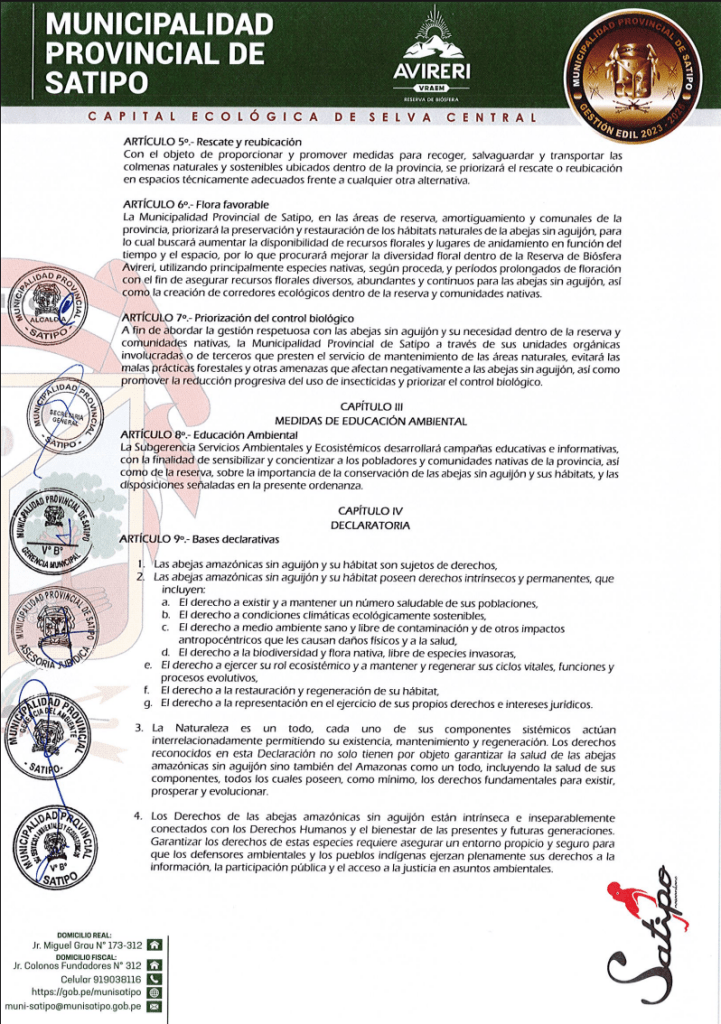
Credit: Earth Law Center, Municipalidad Provincial De Satipo
References:
EthnoBiology and Conservation:
Traditional ecological knowledge on stingless bees in two Ashaninka communities in the central rainforest of Peru | Ethnobiology and ConservationMunicipalidad Provincial
 Writing About the Environment