We often measure climate displacement in numbers..how many people moved, how many homes were lost.
But what we don’t talk about enough is what displacement does to people internally.
Because losing your home isn’t just physical..it’s psychological.
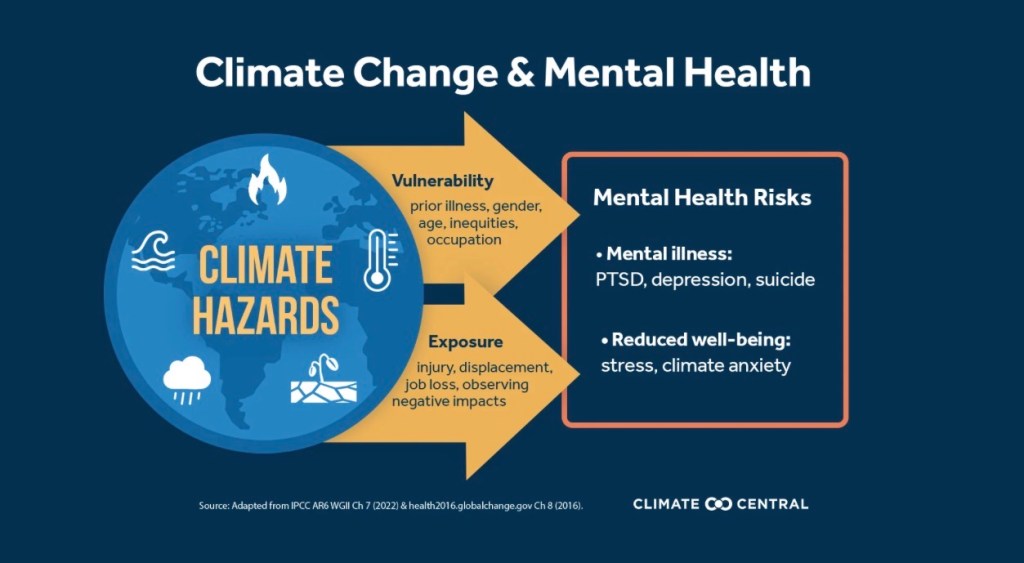
Research shows that climate displacement disrupts livelihoods, identity, and stability, often forcing people into repeated uncertainty and insecurity (migrationpolicy.org).
And in many cases, displacement isn’t a one-time event.
People are forced to move again and again..what some reports describe as cycles of repeated displacement driven by worsening environmental conditions (ReliefWeb).
When Survival Isn’t Enough..
In places affected by floods, droughts, or environmental collapse:
- Families lose not just homes, but community structures
- Children grow up without stability
- Individuals experience chronic stress, anxiety, and trauma
And yet, these impacts are rarely included in policy discussions.
The Invisible Loss…
What makes climate displacement different is that it often erases something harder to measure:
A sense of belonging.
You’re not just leaving a place…you’re losing:
- routines
- identity
- connection to land and memory
If we only measure climate displacement by survival, we miss the full story.
Because staying alive is not the same as being able to live.


Leave a comment