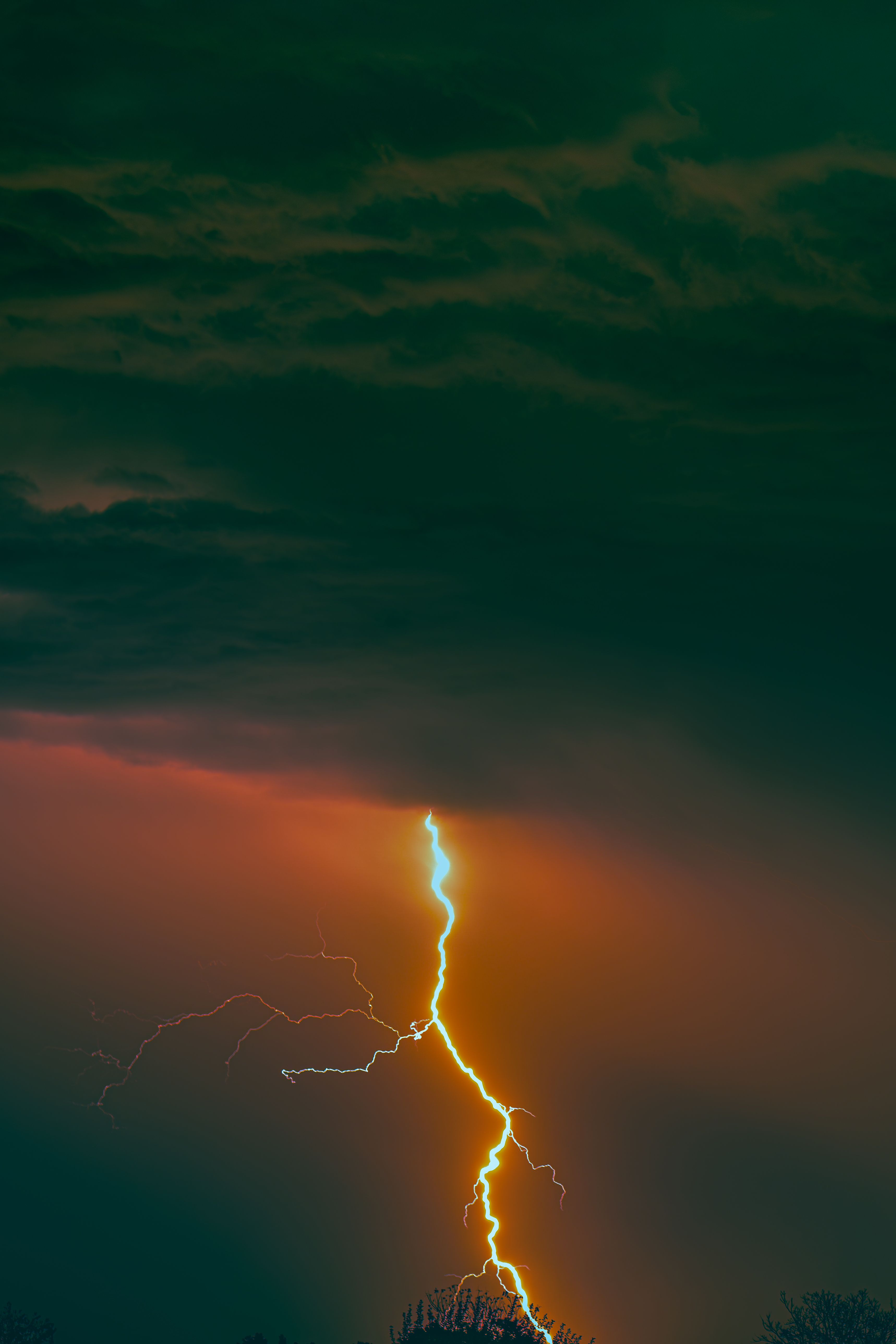
Lightning is the most common ignition source that causes the vast majority of wildfires. There are two types of lightning: cold and hot. Cold lightning is usually of short duration and thus rarely a cause of wildfires. The same cannot be said of hot lightning: currents in hot lightning have less voltage but occur for a longer period of time. Because of the intense heat it generates, hot lightning accounts for the majority of natural fires. While this natural phenomenon is completely unpredictable, adequate land management and landscape fire management planning can significantly diminish the intensity of wildfires and prevent unnecessary deaths and the displacement of people and animals.
Climate change is undoubtedly the biggest trigger of extreme lightning storms. Warmer and longer summers heat the land surface. This, coupled with an increase in carbon emissions, causes stronger updrafts that are more likely to produce more powerful and frequent lightning.
Lighting contributes to climate change primarily through the massive consumption of electricity generated by burning fossil fuels, accounting for over 2% of global greenhouse gas emissions. Inefficient lighting wastes energy, while improper outdoor lighting adds millions of tons of carbon dioxide to the atmosphere.
Keywords: Emissions, Lighting
Source: https://www.nps.gov/articles/wildfire-causes-and-evaluation.htmLinks to an external site.
By: Mandy Mckennzie
 Writing About the Environment
Leave a comment