There are ways to verify whether a company values sustainability, and a tried-and-true way for companies to prove this is to display a B Corp logo on their products. Due to past events, this is no longer the case.
What Is B Corp Certification?
B Lab is a nonprofit organization that gives out the B Corp certification. The certificate is based on the rating the company receives for its environmental and social impacts; a score of 80/200 is considered a passing grade. A foundational issue is that the companies can appear more environmentally friendly by compensating for poor environmental performance by offsetting it with better scores in other areas. It is possible for a company to still be harming its environment and land a B Corp certification.
Real Examples
And this is not some unfounded worry; Nespresso got B Corp Status in 2022. Yes, the same Nespresso whose main product is fundamentally harmful to the environment (single-use aluminum coffee pods), and received accusations of human rights violations regarding their supply chain. A Fast fashion brand, Princess Polly, got it in 2025. Clearly, these standards can be gamed.
What Changed in 2025
B Lab has done well to address these concerns and, in April 2025, made sure there were mandatory minimums that companies had to meet to receive its blessing. There are seven specific areas they will review, so companies can no longer hide their poor environmental scores by scoring well in other areas.
This will go on to be a cautionary tale. B Corp’s certification status depends on whether its requirements are stringent. If just any company can grab a certification, it loses its value. It’s important as well that if you spot a B Corp logo on a product, make sure you look up its actual scores. They could be fudging the truth.
If climate displacement is a global crisis, then one question becomes impossible to ignore:
Who is responsible?
Because when you look closer, the people being displaced are often the ones who contributed the least to climate change.
Regions like Sub-Saharan Africa and low-income countries across Asia face some of the most severe environmental impacts..despite producing only a small fraction of global emissions (migrationpolicy.org).
Meanwhile, countries like the United States and China remain among the largest contributors to greenhouse gas emissions.
This imbalance is what many scholars call climate injustice.
A System Built on Inequality
Climate change doesn’t just create environmental damage..it amplifies existing inequalities.
Countries with fewer resources are less able to adapt
Communities already vulnerable face the greatest risks
Displacement becomes not just environmental..but economic and political
Even global reports highlight that fragile countries are hit hardest while receiving far less climate funding than needed (The Guardian).
So What Does Justice Look Like?
If we take responsibility seriously, then solutions can’t just be about borders and migration policies.
They must include:
Climate funding for vulnerable regions
Legal pathways for displaced populations
Accountability from high..emission countries
Climate refugees are not just victims of nature.
They are, in many ways, victims of a global system that distributes harm unevenly…and protection even more so.
the crisis is no longer theoretical…it’s already unfolding in real time.
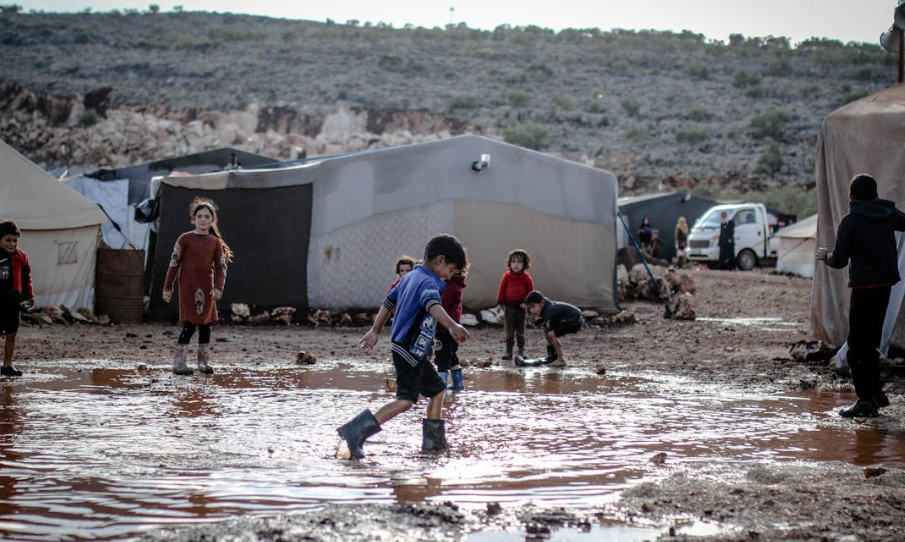
Refugee kids playing between their wet tents in cold winter
Recent reports show that extreme weather is driving record levels of displacement globally, with 2024 ranking among the highest years ever recorded for climate-related displacement (USCRI). And this isn’t happening in isolation…it’s overlapping with conflict, poverty, and fragile systems.
Take Sudan, for example. While much of the displacement is linked to conflict, climate factors like flooding and environmental stress are making the situation worse, pushing communities into repeated cycles of displacement (iom.int).
This creates something researchers are now calling “double displacement”..where people are forced to move not once, but multiple times due to overlapping crises (ReliefWeb).
And it’s not just one region.
In places like Bangladesh, rising sea levels and environmental degradation are quietly pushing people into cities, where they face overcrowding, poverty, and instability (Refugee Law Initiative Blog).
What we’re seeing now challenges one of the biggest assumptions in policy: that displacement is a single event.
It’s not.
It’s ongoing. Repetitive. And increasingly unavoidable.
A wildfire would start from a human ignition or a natural cause. It would then be fueled by flammable factors such as wind or dryness, and the fire would continue to spread and intensify. Then the blaze went into creating dozens of small fires to continue the spread. In this phase, the fire can go into a dangerous event called a flashover. This is when the right combination of heat, oxygen, and fuel can cause a nearby tree or house to suddenly catch fire. This almost-instantaneous phenomenon leaves little time for escape. Wildfires also escalate rapidly through a combination of dry, abundant fuel, high winds, and steep terrain, often described by the fire behavior triangle. Escalation is driven by preheating ahead of the flame front, ember-driven spotting, and climate change-induced droughts that make vegetation extremely flammable. After all stages of a wildfire, depending on the intensity, the fire may go into the smoldering stage, where the flames die down.
Wildfire risk to people and homes is increasing. While climate change and decades of fuel buildup have exacerbated wildfires, ongoing home development in wildfire-prone lands is also increasing wildfire risks to communities. Building a home with wildfire in mind can increase a home’s survivability. Using wildfire-resistant building materials in the construction of a home can reduce vulnerabilities and opportunities for ignition. Additionally, managing the vegetation immediately surrounding the home, known as the home ignition zone, reduces the potential for a home to ignite during a wildfire. In areas with high wildfire hazard, land-use planning can reduce wildfire risks to homes and communities by requiring new developments to comply with wildfire-resistant design and construction techniques. Wildland fire occurs naturally in almost all vegetated ecosystems across North America, to varying degrees of frequency and intensity, and generally is considered beneficial to most ecosystems. Before European settlement, fire was used by Native Americans as a tool to support sustainable forests, agricultural lands, and wildfire hunting habitats. Frequent wildland fires kept forest landscapes open and healthy from the longleaf pine forests of the South to the ponderosa pine woodlands of the West. Historically, wildland fires in many landscapes were cool and low to the ground, rarely entering treetop canopies and burning entire forests.
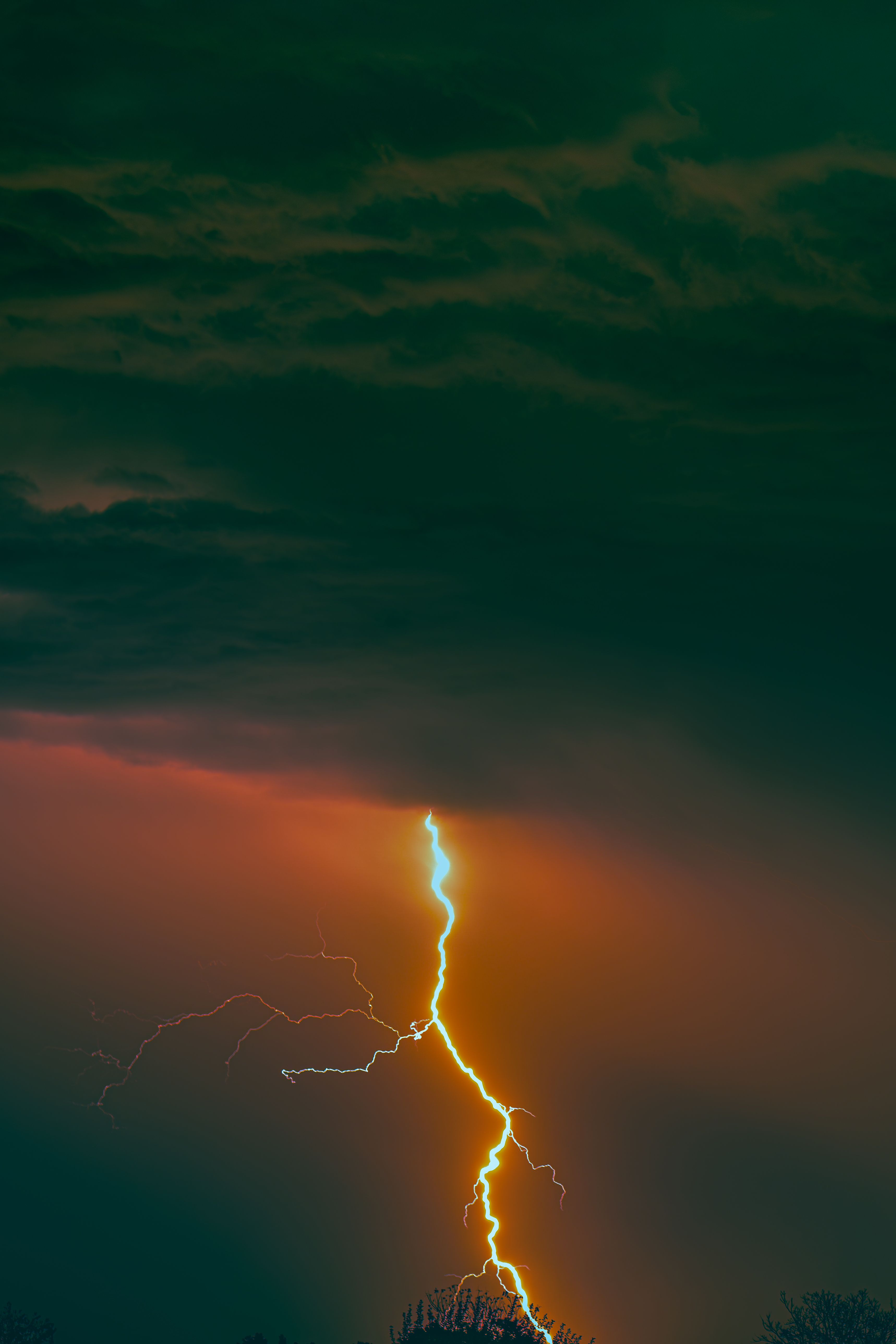
Lightning is the most common ignition source that causes the vast majority of wildfires. There are two types of lightning: cold and hot. Cold lightning is usually of short duration and thus rarely a cause of wildfires. The same cannot be said of hot lightning: currents in hot lightning have less voltage but occur for a longer period of time. Because of the intense heat it generates, hot lightning accounts for the majority of natural fires. While this natural phenomenon is completely unpredictable, adequate land management and landscape fire management planning can significantly diminish the intensity of wildfires and prevent unnecessary deaths and the displacement of people and animals.
Climate change is undoubtedly the biggest trigger of extreme lightning storms. Warmer and longer summers heat the land surface. This, coupled with an increase in carbon emissions, causes stronger updrafts that are more likely to produce more powerful and frequent lightning.
Lighting contributes to climate change primarily through the massive consumption of electricity generated by burning fossil fuels, accounting for over 2% of global greenhouse gas emissions. Inefficient lighting wastes energy, while improper outdoor lighting adds millions of tons of carbon dioxide to the atmosphere.
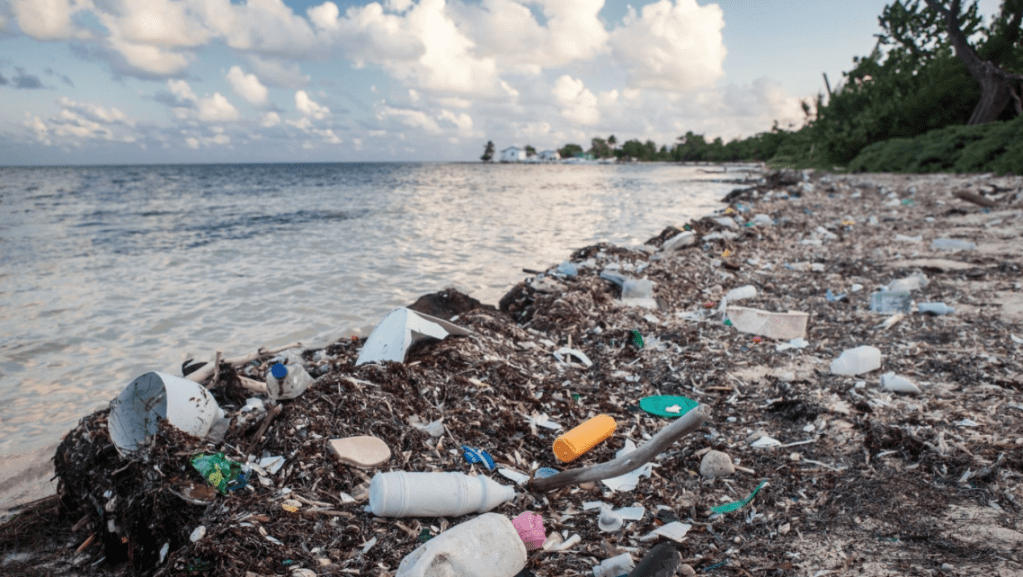
Although plastic may be a very convenient material that is used everywhere, in bags of chips, straws, cups, bags, etc. It is also a very dangerous material that is now in the top 10 environmental problems that we are facing in 2026. According to the article Top 10 Environmental Problems Facing The World in 2026: Climate Change, Pollution, and Global Impact, the plastic pollution crisis is number 2 in the top 10 environmental problems. Every year, millions of tons of plastic end up in the ocean. This has led to microplastics being found nearly everywhere in the ocean ecosystems. Microplastics have been found in marine life, drinking water, and even human bodies. This crisis has even led to damage in the economy, such as in fisheries and tourism. In another article titled, 16 Biggest Environmental Problems of 2026, plastic pollution is number four in the 16 biggest environmental problems. Some researchers have found that if this problem is not addressed then the plastic crisis will grow to 29 metric tons per year by the year 2040, not accounting for microplastics. When taking microplastics into account, the cumulative amount of plastic in the ocean can reach 600 million tons by 2040.
Headline: The FEMA Money Is Sitting in a Bank Account Somewhere. We Just Can’t Touch It.
I am referring to $150 million. That is how much disaster preparedness funding is currently stalled in Washington state. This is not due to a lack of funds or a failure by Congress to approve the funds; rather, the Trump administration has suspended a FEMA program known as BRIC (Building Resilient Infrastructure and Communities). Despite a federal judge’s order to reinstate the program, the administration has yet to act.
Let me repeat: A judge ruled that the states should receive their funds. Months have passed, but nothing has changed.
So what exactly is BRIC?
BRIC is a FEMA program that funds states to prepare for disasters before they happen. This includes projects like constructing flood walls, retrofitting structures for wildfires, establishing safe rooms in schools, and improving hospital seismic resilience. Since its inception, BRIC has invested $4.5 billion in over 2,000 projects across the country.
The Trump administration attempted to end the program in April 2025, claiming it was “wasteful.” In December, a federal judge ruled that the action was illegal and ordered FEMA to restore funding. However, as of February 2026, FEMA had yet to comply.
Let us now take a look at the situation on the ground.
In Massachusetts, two cities outside of Boston were set to receive $50 million for flood protection projects. This project would construct a barrier to prevent tidal flooding near a high In Massachusetts, two cities outside of Boston were set to receive $50 million in flood protection projects, prompting local officials to consider whether they can complete the project in smaller chunks, as the entire project may never be completed.
In Washington state, about two dozen projects worth more than $150 million are on hold. One such project aims to provide emergency power to a hospital and a school district, while another seeks to protect towns from flooding. In one instance, the state had already spent $31 million on design and permits before the federal government reduced funding.
This demonstrates what I call the resilience funding gap.
I’ve been writing about the gap between our promises and how projects are actually executed. BRIC is a great example. Congress approved the funding, projects were selected, and communities devised plans. However, the executive branch rejected the program and put it on hold.
What frustrates me is that every dollar spent on disaster mitigation saves approximately six dollars in recovery costs. By freezing this funding, the government not only fails to protect people, but it also chooses to incur higher disaster response costs later rather than investing less now in preparation.
This is not fiscally responsible; it is simply imprudent.
The water will not wait.
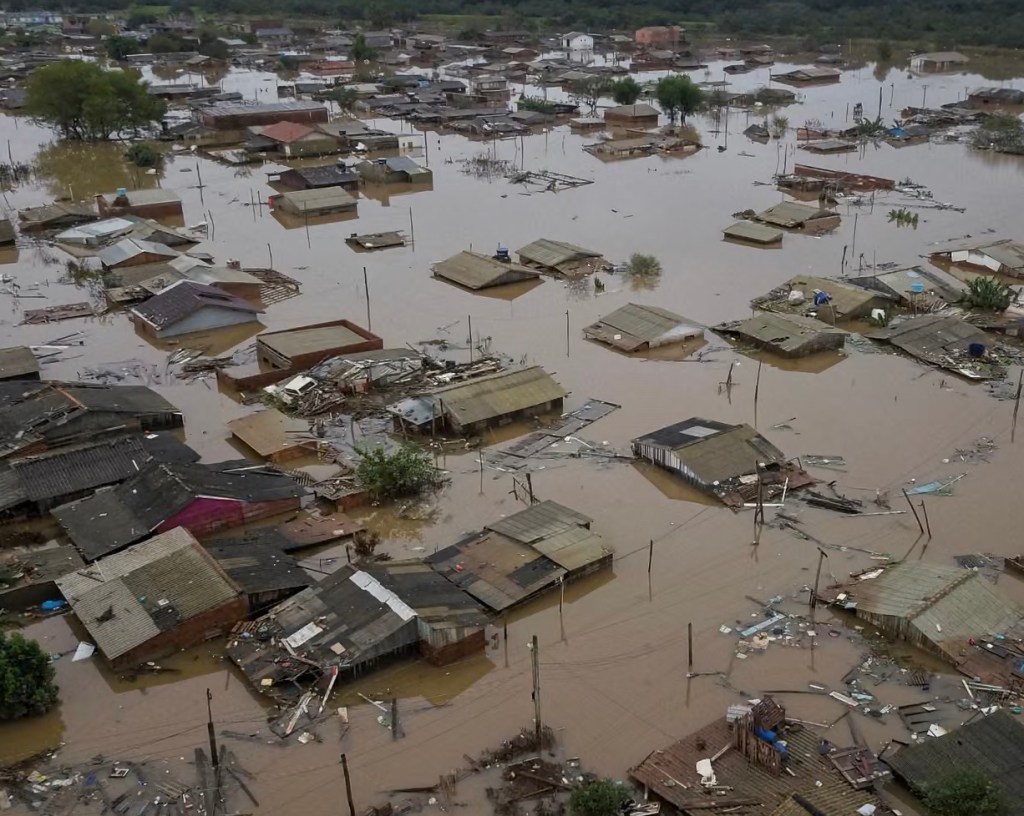
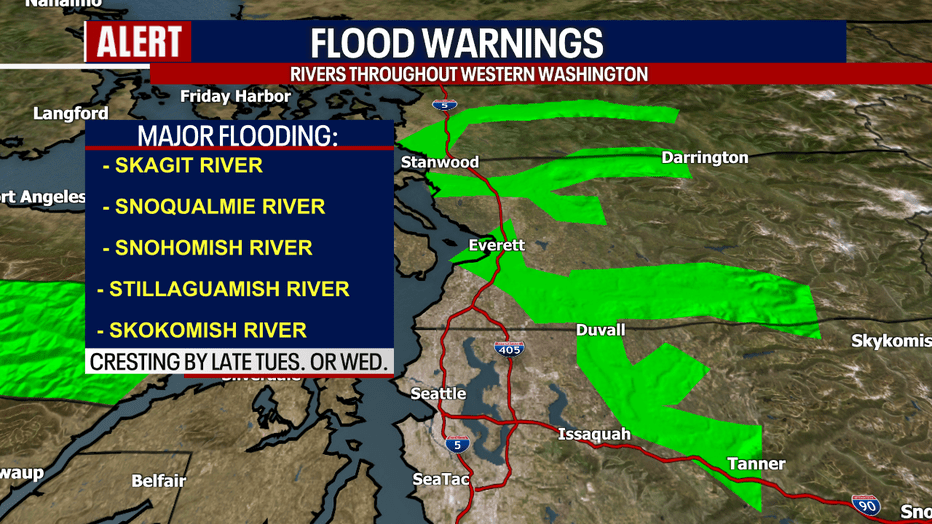
While FEMA decides whether to comply with the court order, flooding continues. Washington State recently requested $21 million in federal disaster aid following catastrophic flooding in December, which caused estimated damages of more than $182 million.
We could have used some of the BRIC funding to help mitigate the damage, but it has remained frozen.
I may not be an economist, just a junior who reads too many court documents, but it appears straightforward: we can invest in flood barriers now or rescue boats later. One option is less costly and saves lives.
Every time I see politicians in hard hats, cutting ribbons on flashy climate initiatives with oversized checks in hand and smiles plastered on their faces, I can’t help but feel something is off. Beneath the sparkle and hype, the reality remains clear: the waters keep rising, and the need for genuine action grows ever more urgent.
I’ve been delving into what I call the “resilience funding gap,” a concept that sounds simple but is deeply alarming. We often make grand promises about funding climate adaptation, hold celebratory press conferences, and bask in the glow of our intentions. Yet when it comes time to put those plans into action, the funds often vanish into thin air.
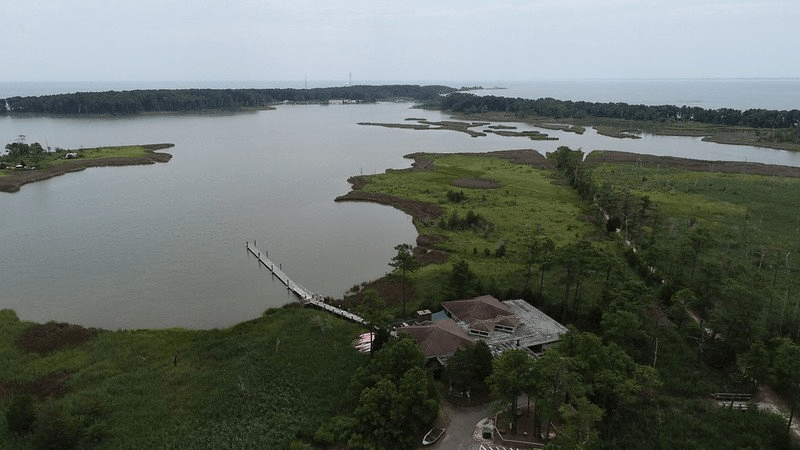
This leads us into a frustrating cycle: we engage in extensive planning, but the actual construction and action fall tragically behind. Take, for example, the chilling warning issued last year by the Maryland Department of Natural Resources: local governments can’t even kick off construction projects due to a lack of funding. We can sketch out innovative living shorelines and draft effective stormwater management plans, but without the financial support to put them into practice, they remain mere blueprints, dreams with no means to be realized.
This resilience funding gap is all too common. We rally around our intentions, but when it’s time to deliver real results, we falter. Meanwhile, communities in flood-prone areas are left in limbo, watching rivers swell, and storms grow fiercer by the day.
Let’s look at Virginia for a moment. The state recently rejoined the Regional Greenhouse Gas Initiative, which is fantastic news! This program had previously funneled $827 million into flood preparedness and energy efficiency before it was abruptly yanked away in 2023. Now that the funding is back and the governor has signed off on the budget, celebrations are near, and my heart swells with hope, too.
But here’s the troubling truth: this funding isn’t new. It’s merely the money we lost and then miraculously revived. That’s not progress; it’s just treading water. While we were busy fighting to reinstate that funding, the seas rose higher, storms grew more relentless, and towns like Norfolk, Hampton, and Alexandria continued to grapple with the damaging effects of flooding.
Let’s get real for a moment. As a college junior, I’m expected to be optimistic about budgets, bills, and all those grand announcements. Some days, I believe in the process; other days, I find myself glancing over flood maps, grant applications, and frustrating fine print that says, “construction not eligible.” It makes me question whether we truly care about driving change.
It often feels like we’re more invested in the pomp of ribbon-cutting ceremonies and press releases than in doing the actual work necessary to safeguard our communities. When funding runs dry before construction even begins, that’s not resilience; that’s creative performance.
The water doesn’t care about our announcements. It just keeps rising while we keep saying, “Next year, we’ll build.” I’ve had enough of waiting, and I’m ready to see us take meaningful action this year.
In a world where urban noise and quietcations now collide, two recent stories reveal a growing tension between everyday soundscapes and the human need for rest. In Seattle, demand for what are now called “quietcations” is surging as residents search for any escape from overstimulation. The city ranks fifth among all U.S. metros seeking peaceful getaways, according to new reporting by Seattle Red. Researchers analyzed more than 200 search terms related to peaceful travel and found that Seattle locals are increasingly craving quiet breaks from stress, noise, and crowded streets.
At the same time, new health research shows that noise pollution is not just an annoyance. It produces measurable harm. A recent U.S. News report describes a study in the journal Cardiovascular Research showing that even one night of typical road traffic noise can impair blood vessel function, raise heart rate, increase inflammation markers, and disrupt sleep quality. The findings confirm that even while we sleep our bodies are still listening.
Together, these stories illustrate why silence itself has become an environmental need. As cities grow denser and background noise becomes harder to escape, Americans are pursuing restorative environments with intention. This includes slow paced travel, minimalist itineraries, and destinations chosen specifically for low noise and light pollution.
The rise of “quietcations” is not simply a wellness trend. It is a response to environmental conditions that increasingly follow us into our bedrooms. When a single night of urban noise can place cardiovascular stress on a healthy adult, the desire for stillness becomes essential rather than indulgent. Seattle residents are not only stressed. They are signaling something larger. The search for quiet has become a form of environmental self-protection.
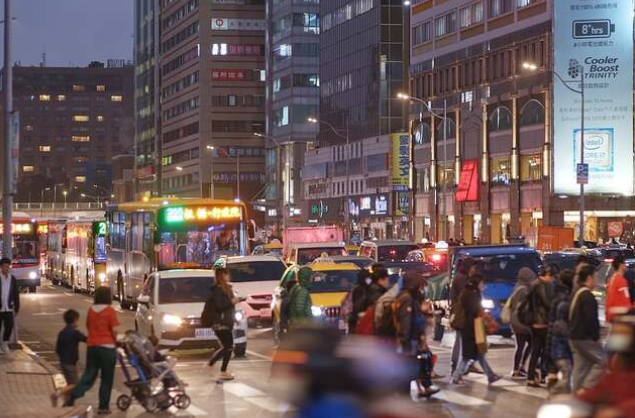
Representation of movement within an urban environment and how it can correlate to the production of sound.
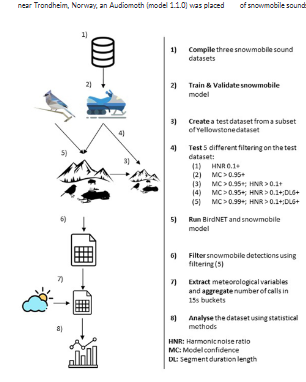
Winter in Yellowstone often appears quiet, but new ecological research shows that the landscape is far more acoustically fragile than it seems. Recent findings highlight how interactions between snowmobile noise and birds shape the winter soundscape in subtle yet significant ways. Scientists have begun using advanced acoustic monitoring tools to understand how the presence of snowmobiles affects the communication patterns of overwintering species that depend on sound for safety, foraging, and early social bonding.
Using more than forty three thousand hours of audio recordings collected across Yellowstone National Park, researchers trained a deep learning model to identify snowmobile noise with high accuracy. They then examined how bird vocalizations changed before and after these noise events. The results were consistent across multiple sites in the park. In both morning and evening hours, bird vocalizations declined in the minutes leading up to a snowmobile’s arrival. After the engine noise passed, vocal activity rebounded and, in some cases, exceeded baseline levels. These patterns suggest that birds reduce calling behavior when they detect distant engine noise, possibly as a cautionary response, and then resume normal communication once the disturbance has ended.
This matters because winter communication is not optional for birds. During the non-breeding season, birds form flocks, maintain group cohesion, and avoid predators through subtle acoustic cues. Interruptions to these behaviors can have cascading effects on energy budgets, habitat use, and even pre breeding social structure. Yellowstone enforces noise reduction measures for over snow vehicles, and the observed changes in vocalizations occurred even under these regulated conditions. Parks or recreational areas without such restrictions may experience stronger ecological impacts.
The study also demonstrates how new technologies are transforming environmental monitoring. Automated sound analysis makes it possible to detect wildlife responses that were previously hidden in large datasets. These tools expand the ability of conservation managers to understand how human recreation affects ecosystems, especially in winter when animals are already operating near the limits of their survival.
As climate pressures, land use conflicts, and winter tourism continue to reshape protected landscapes, managing sound becomes just as important as managing space. Understanding the interaction between snowmobile noise and birds is a step toward safeguarding the quieter parts of wilderness that wildlife relies on most.
Burson, Shan. Winter Acoustic Monitoring in Yellowstone National Park, December 2017 to March 2018. National Park Service, 2018. National Park Service DataStore, File 632415Natural Soundscape Monitoring
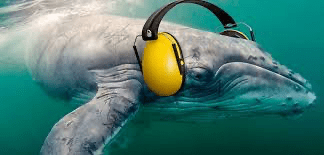
Marine life with headphones on (AI generated) from Awesome Ocean
Noise pollution, defined as unwanted or harmful levels of sound in the environment, poses significant threats to wildlife. Various studies have highlighted its detrimental effects on different animal species, particularly in marine and terrestrial environments. This blog lists 5 consequences that noise pollution has for wildlife.
1. Disruption of Communication
Many animals rely on sound for communication, whether it be for mating calls, warning signals, or social interactions. Noise pollution can mask these important sounds, making it difficult for animals to hear one another. For instance, marine animals like whales and dolphins use echolocation to navigate and hunt. Increased background noise from ships and industrial activities can interfere with these signals, leading to disorientation and reduced hunting success.
2. Impacts on Breeding and Parenting
Sound carries different meanings in the animal kingdom, especially during breeding seasons. Noise pollution can hinder mating calls, reducing reproduction rates. Furthermore, parent birds, for example, may struggle to communicate with their chicks, impacting the survival rates of their young. Studies have shown that some bird species alter their songs or breeding behaviors in response to louder environments, often leading to decreased reproductive success.
3. Stress and Behavioral Changes
Exposure to constant noise causes stress in animals, which can affect their overall health and behavior. Stress responses can result in increased heart rates, altered hormone levels, and changes in feeding habits. Animals flee their habitats to seek quieter environments, which leads to increased competition for resources in less polluted habitats.
4. Altered Predator-Prey Dynamics
Noise pollution can also impact predator-prey relationships. For example, prey animals may become more vigilant and evasive due to the constant distraction of noise, making them harder to catch. Additionally, predators may struggle to locate their prey amid the noise, leading to population decline for various species.
5. Habitat Displacement
In extreme cases, persistent noise pollution can cause animals to completely abandon their natural habitats. This displacement can disrupt entire ecosystems, leading to reduced biodiversity as species are forced out of areas where they have successfully lived for generations.
Conclusion
The impacts of noise pollution on animals extend farther than most people recognize. As human activities expand into animals’ natural habitats, it becomes increasingly important to mitigate the effects of noise pollution on wildlife. Prioritizing quieter technologies and creating protected acoustic environment can support the well-being of animal populations and the ecosystems they inhabit.