Headline: The FEMA Money Is Sitting in a Bank Account Somewhere. We Just Can’t Touch It.
I am referring to $150 million. That is how much disaster preparedness funding is currently stalled in Washington state. This is not due to a lack of funds or a failure by Congress to approve the funds; rather, the Trump administration has suspended a FEMA program known as BRIC (Building Resilient Infrastructure and Communities). Despite a federal judge’s order to reinstate the program, the administration has yet to act.
Let me repeat: A judge ruled that the states should receive their funds. Months have passed, but nothing has changed.
So what exactly is BRIC?
BRIC is a FEMA program that funds states to prepare for disasters before they happen. This includes projects like constructing flood walls, retrofitting structures for wildfires, establishing safe rooms in schools, and improving hospital seismic resilience. Since its inception, BRIC has invested $4.5 billion in over 2,000 projects across the country.
The Trump administration attempted to end the program in April 2025, claiming it was “wasteful.” In December, a federal judge ruled that the action was illegal and ordered FEMA to restore funding. However, as of February 2026, FEMA had yet to comply.
Let us now take a look at the situation on the ground.
In Massachusetts, two cities outside of Boston were set to receive $50 million for flood protection projects. This project would construct a barrier to prevent tidal flooding near a high In Massachusetts, two cities outside of Boston were set to receive $50 million in flood protection projects, prompting local officials to consider whether they can complete the project in smaller chunks, as the entire project may never be completed.
In Washington state, about two dozen projects worth more than $150 million are on hold. One such project aims to provide emergency power to a hospital and a school district, while another seeks to protect towns from flooding. In one instance, the state had already spent $31 million on design and permits before the federal government reduced funding.
This demonstrates what I call the resilience funding gap.
I’ve been writing about the gap between our promises and how projects are actually executed. BRIC is a great example. Congress approved the funding, projects were selected, and communities devised plans. However, the executive branch rejected the program and put it on hold.
What frustrates me is that every dollar spent on disaster mitigation saves approximately six dollars in recovery costs. By freezing this funding, the government not only fails to protect people, but it also chooses to incur higher disaster response costs later rather than investing less now in preparation.
This is not fiscally responsible; it is simply imprudent.
The water will not wait.
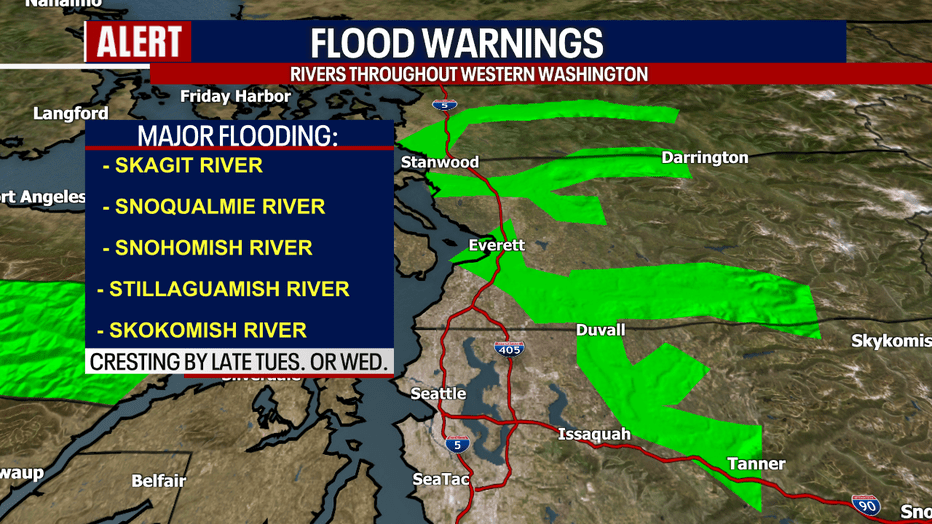
While FEMA decides whether to comply with the court order, flooding continues. Washington State recently requested $21 million in federal disaster aid following catastrophic flooding in December, which caused estimated damages of more than $182 million.
We could have used some of the BRIC funding to help mitigate the damage, but it has remained frozen.
I may not be an economist, just a junior who reads too many court documents, but it appears straightforward: we can invest in flood barriers now or rescue boats later. One option is less costly and saves lives.
I know which option I would pick.
MLA Citations:
Government Executive. “Despite court order, a critical FEMA program remains frozen.” GovExec, 17 Feb. 2026, www.govexec.com/management/2026/02/despite-court-order-critical-fema-program-remains-frozen/411509/.
GovTech. “$150M in Federal Disaster Preparedness Funds for Wash. in Limbo.” GovTech, 17 Feb. 2026, www.govtech.com/em/preparedness/150m-in-federal-disaster-preparedness-funds-for-wash-in-limbo.
 Writing About the Environment
Leave a comment