
By Caroline Taylor
Noise is easy to dismiss because it leaves no physical trace. But for wildlife, anthropogenic noise pollution functions like a permanent alteration to habitat, reshaping how animals move, communicate, and survive.
A recent study published in Wildlife Biology Letters examines how chronic human-generated sound affects animal behavior over time. Rather than focusing on short, dramatic disturbances, the researchers show that persistent noise changes everyday decision-making, including vigilance levels, movement patterns, and energy use
These subtle shifts matter because they accumulate, quietly reducing fitness without obvious signs of immediate harm. Sound is not background for animals. It is information. When mechanical noise masks biologically meaningful cues, animals must adapt by moving differently, spending more energy remaining alert, or abandoning otherwise suitable habitat. A large meta-analysis published in Biology Letters supports this pattern across taxa, finding that noise disrupts behavior in birds, mammals, amphibians, fish, and insects alike, regardless of evolutionary lineage.
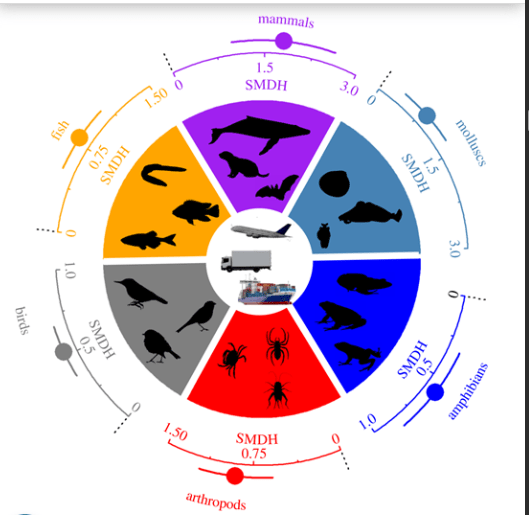
Effects of anthropogenic noise on taxonomic groups. Shown are the standardized mean differences (SMDH) and 95% confidence intervals (CIs) from random-effects models. The dashed line at zero indicates no effect of anthropogenic noise; an effect of noise occurs if the 95% CI of the SMDH does not overlap zero. The effects of anthropogenic noise on animals: a meta-analysis | Biology Letters | The Royal Society
Importantly, the consequences of chronic noise are not limited to remote ecosystems. In North Tonawanda, New York, residents have filed a class-action lawsuit against a cryptocurrency mining facility, alleging that its industrial-scale cooling fans produce constant, low-frequency noise that operates day and night. Reporting shows that the sound is not only audible but physically felt as vibration, prompting claims of lost sleep, stress, and diminished quality of life.
The case illustrates a key point often missing from environmental debates: noise pollution affects humans and wildlife through the same mechanisms of chronic exposure.
Unlike visible habitat destruction, noise is rarely regulated with ecological impact in mind. Yet treating landscapes as intact while allowing soundscapes to degrade creates a false sense of protection. Habitat is not just what animals see. It is what they hear. Until noise is recognized as a shared environmental resource, conservation efforts will continue to leave part of the ecosystem unprotected.
Sources:

