Brazil is home to one of the biggest contributors to the slow but methodical fight against climate change: the Amazon rainforest. Yet, when the expansion of the agricultural industry is continuously backed by governmental figures. The deforestation of the Amazon rapidly picks up over time, as many of the parties involved find ways to violate or work their way around protective legislation. Even legislation that is entered into between companies and indigenous groups. So, how exactly do the political parties from the Brazilian governments and agribusiness threaten our fight against climate change? Well, according to a recent Eurasia Review article written by Rubens Valente, the continuous pressure to remove the pact known as the moratorium brings the threat of increased Amazon deforestation. The moratorium is the pact that bans supply chains of organizations, public agencies, and NGOs from using any soy produced in deforested Amazon sectors after July 2008. Meaning that this pact is extremely valuable in benefiting the countries’ fight against climate change and the preservation of the Amazon.
Recently, the pressure from the right-wing politicians in the Brazilian government has grown. Now, many of these figures aim to dismantle the moratorium to benefit the expansion and production of agribusiness. According to research conducted by IPAM (Amazon Environmental Research Institute), with the possible loss of the moratorium, Brazil’s Amazon could be victim to a 30% increase in deforestation in comparison to the numbers recorded for 2024. So, with the incoming possible failure of the involved parties being able to respect and enforce a pact that protects ecosystems. Demonstrating the personal benefit given to the political leaders involved in argibusiness, and displaying the blatant forms of ignorance that are found when governments are unable to operate in a non-biased manner. The benefit to the bigger organizations is also dismantling the even playing field that local producers have been able to compete on. While at the very same time, indigenous leaders are worried about the deforestation that is impending on their sacred lands.
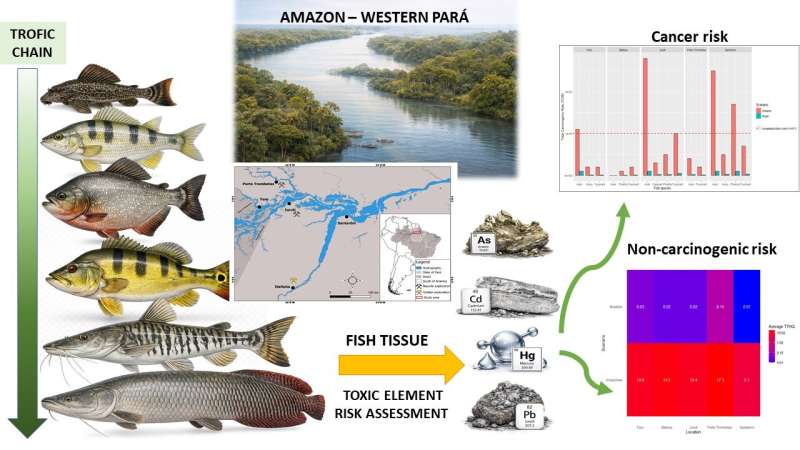
The damage is essentially a domino effect, because when organizations, whether legally or illegally, expand their agricultural industries, pesticides and other harmful chemicals are present. Except, beyond just pesticides, the illegal movements of mining in the protected areas of the Amazon are growing. These chemicals damage the health of natural soils or vegetation in the surrounding areas. But they also pose a risk to the health of animals present in the Amazon ecosystems. In a Phys.org article written by Fabio Edir Amaral Albuquerque and Antonio Humberto Hamad Minervino, the contamination of fish is increasing with metals such as mercury and arsenic. It is reported that the concentration of these chemicals in carnivorous fish exceeds the Brazilian legal consumption limit. Creating risk in the form of cancer and other forms of sickness.
Overall, the political reluctance to respect and abide by a promising pact (the moratorium) is fueled by personal agendas and benefits. Alongside their inability or willingness to relegate illegal industrialization of their protected ecosystems. Will together continue to cause domino effect damages to not only indigenous communities financially, but also physically.
Credit: Antonio Minervino
References
Amazon fish contaminated with toxic metals threaten riverine communities’ health
Concern Among Indigenous Leaders, Relief For A Few, As Amazon Soy Moratorium Falters – Analysis – Eurasia Review


 Writing About the Environment