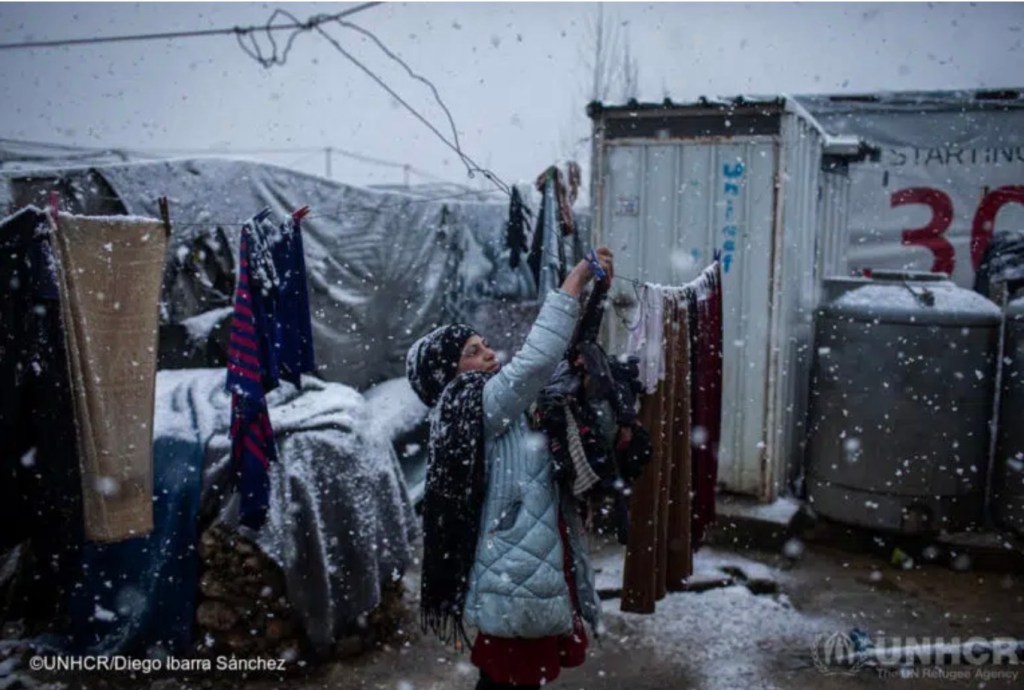
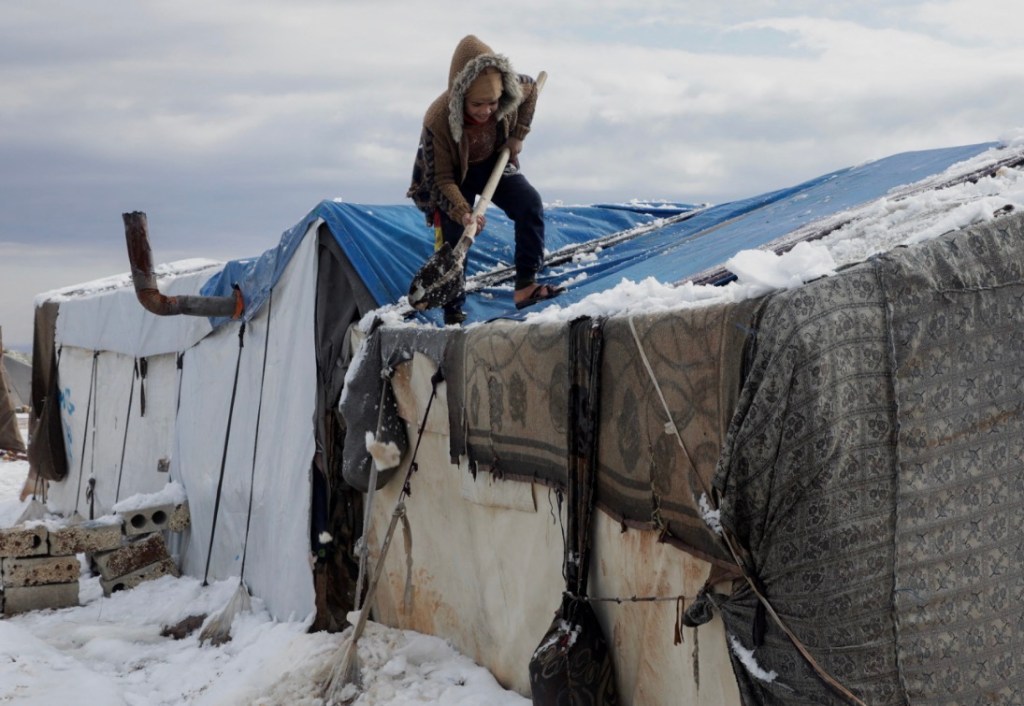
So far I’ve focused on climate displacement as something that forces people to leave their homes. But there’s another side to this crisis that often gets overlooked:
What happens after people are displaced?
For millions of refugees from Syria living in countries like Lebanon and Jordan, climate is no longer the reason they fled….but it has become part of their daily survival.
Every winter, temperatures drop, storms intensify, and refugee camps become increasingly dangerous places to live.
When Cold Becomes a Crisis
In informal settlements and camps, protection from the weather is limited.
Families often live in:
- tents that flood during heavy rain
- makeshift shelters that don’t retain heat….risk of having heaters in tents ?
- overcrowded spaces with limited resources
According to the United Nations High Commissioner for Refugees, winter conditions in refugee hosting regions regularly put already vulnerable populations at risk, especially children and the elderly.
Aid organizations like International Rescue Committee report that many families are forced to choose between heating and basic necessities like food or medicine.
Displacement Doesn’t End the Risk….It Changes It
What’s striking is that while these refugees are not classified as “climate refugees,” they are still deeply affected by environmental conditions.
This challenges the way we think about climate and migration as separate issues.
Because in reality:
- Conflict causes displacement
- Climate conditions shape survival afterward
And the two are constantly interacting.
A Cycle of Vulnerability
Winter storms, flooding, and extreme cold don’t just create temporary hardship..they deepen long term instability.
- Children miss school due to unsafe conditions
- Illness spreads more easily in cold, damp shelters
- Families fall further into poverty trying to cope
In some cases.. harsh weather even forces families to relocate again, creating a cycle that feels never…ending.
What this reveals is something important:
Climate doesn’t just displace people…it continues to affect them long after they’ve fled.
So even when refugees are not labeled as “climate refugees” they are still living on the frontlines of environmental hardship.
And maybe that’s the deeper issue.
We keep trying to separate crises into categories..conflict, climate, migration..when for millions of people, they are all happening at once.
We can help by advocating for their rights and fighting to deliver their voices and if you are able to ..donate for a trusted humanitarian organizations that help them


Leave a comment