space spending vs. environmental crisis
The Earth is burning. Wildfires are eating through continents. Coastal cities are flooding on sunny days. And yet, here we are still having the same argument that a twenty-year-old poet started over fifty years ago.
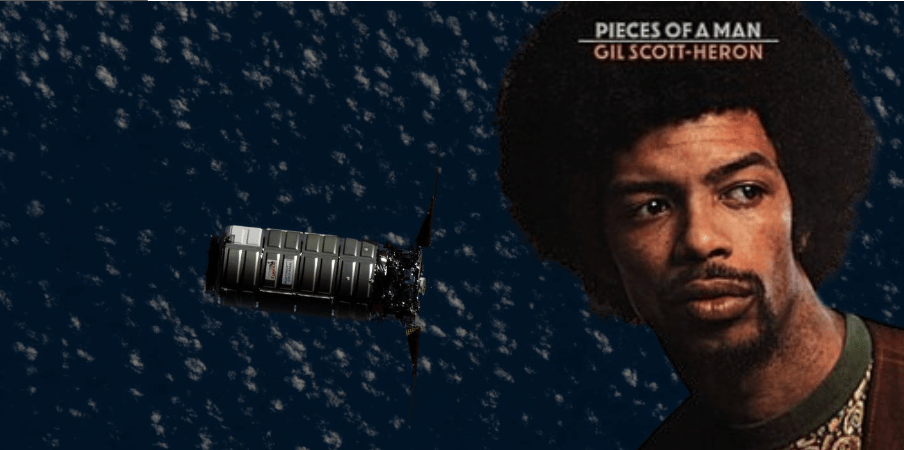
In 1970, Gil Scott-Heron released a spoken-word piece called Whitey on the Moon on his debut album Small Talk at 125th and Lenox. Backed by nothing but a conga beat, Scott-Heron laid out the brutal logic of a country choosing moon landings over medicine bills, rat-infested apartments, and no running water in Black neighborhoods. The refrain was simple and savage: and Whitey’s on the moon. In 90 seconds, he said what economists and policy analysts couldn’t: that every dollar pointed toward the sky was a dollar turned away from the ground people actually had to live on.
I first came across this poem listening to his discography, and it stopped me cold. Not because it was angry, but because it was accurate. The Apollo program cost $25.4 billion between 1960 and 1973 (nearly $187 billion in today’s dollars). Meanwhile, New York City’s entire rat control bureau operated on a budget of $4.5 million with 420 workers for the whole city. The math wasn’t complicated. The priorities were just wrong.
What hit harder was realizing this conversation hasn’t ended. It just got rebranded.
Today, NASA’s annual budget sits at approximately $24.4 billion for fiscal year 2026. The EPA, the agency responsible for protecting our air, water, and soil, received $9.16 billion in FY2024, and took a 3.5% cut between 2025 and 2026. The proposed 2027 White House budget would eliminate the EPA’s climate protection programs entirely while funneling $8.5 billion into the Artemis moon program. Scott-Heron’s math problem didn’t go away. We just updated the numbers.
I want to be fair here. I’m not arguing we should abandon space exploration. And I’m not arguing that NASA is the villain. What I am saying is that when environmental justice communities are still living with polluted water, degraded air, and crumbling infrastructure, we have to ask the same question Scott-Heron asked: How come there ain’t no money here?
The poem was never really about the moon. It was about who gets to look up, and who gets left behind.


Leave a comment