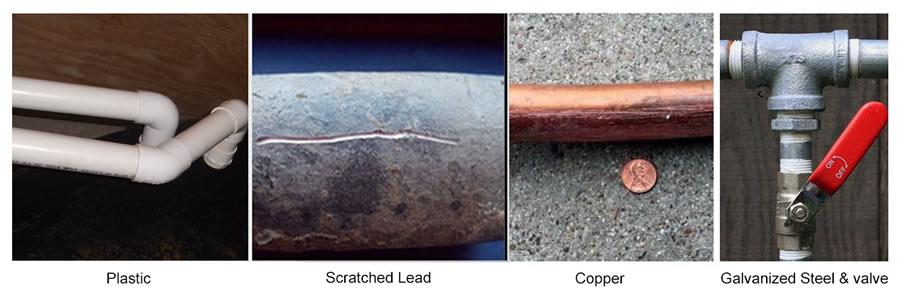
Since there is no safe amount of lead that can be consumed, you might be curious if your drinking water at home has any lead. A first step is identifying if the service line, the pipes from the water main that transport the drinking water to the plumbing, are made of or contain lead.
If you have municipal water: call your water supplier and ask if the service lines contain lead.
If you have a private well: locate the meter. If the meter is made of metal, scratch the metal and have a magnate handy. If the color of the metal is orange and the magnet does not stick, then it is likely copper, which does not contain metal itself (though it should be noted that the solder of copper pipes before 1986 contained high amounts of lead). If the metal was hard to scratch and the magnet stuck, then it is likely galvanized steel, which can trap lead and also have been lined with lead. If the metal was easy to scratch and the magnet did not stick, then the pipe is likely lead.
Apart from identifying the material of the pipes, you can also have your water tested by a certified lab. Home test kits also exist but they are susceptible to human error. 0 ppb is ideal and results of 1-5 ppb indicate low lead content but should be monitored over time, 6-14 ppb is an elevated amount and warrants having a filter installed, 15+ ppb is high and should have immediate action taken such as the instillation of a filter and contacting a public health official.
References
https://www.epa.gov/ground-water-and-drinking-water/protect-your-tap-quick-check-lead-0
https://qualitywaterlab.com/water-testing/how-to-test-for-lead-in-water/
 Writing About the Environment
Leave a comment