March 24th, 2026
By Caroline Taylor
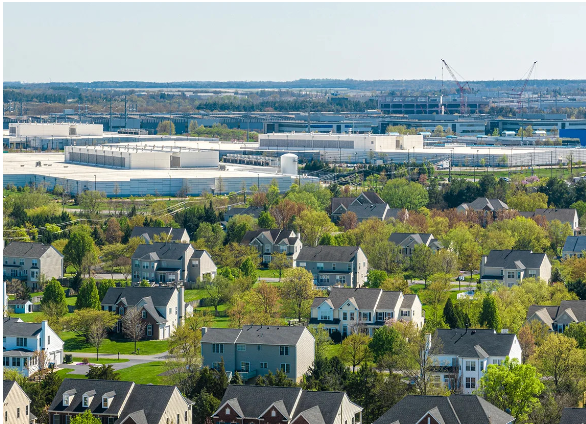
As AI data centers and noise pollution expand together, Northern Virginia has become a national case study for both promise and burden. In Loudoun County, “Data Center Alley” now hosts hundreds of facilities that move a large share of the world’s internet traffic, a buildout that began years ago and accelerated with the growth of AI. The result is unprecedented tax revenue and an economy reshaped by server farms that rarely sleep. It is also a new kind of neighborhood soundscape, a continuous mechanical hum that residents describe as inescapable.
The civic story reads as triumph and tradeoff at once. Governing reports that Northern Virginia leads the world in data center concentration and that local governments have relied on the industry’s tax base to fund services while keeping residential taxes lower. Yet the same article acknowledges the strain that this buildout places on land use, power infrastructure, and community life, especially as facilities multiply near homes and schools. The Oxford American adds a ground level view from Loudoun County, where dairy farms gave way to windowless bunkers, transmission lines, and round‑the‑clock operations. The piece captures what residents feel when a landscape changes faster than the rules that govern it, and when benefits and harms do not fall evenly.
What sounds like progress in economic development can sound very different from a bedroom at 2 a.m. The Environmental and Energy Study Institute explains why. Data centers emit persistent noise from cooling systems, backup generators, and large fans. Many local ordinances were written for bar patios and block parties, not for industrial‑scale facilities that operate continuously. Without clear measurement standards for low frequency and tonal noise, complaints often go unresolved. The result is frustration, sleep disruption, and declining property values near certain sites. EESI notes that better acoustic design, clearer standards, and siting choices can reduce conflict, but those protections must be embedded upstream in the approval process rather than improvised after a facility goes live.
There is a way to read Data Center Alley that honors both the data and the people. These buildings keep hospitals online, connect classrooms, and power the AI tools we increasingly use. They also create environmental conditions that demand policy maturity. Responsible growth requires accurate noise modeling, enforceable limits that account for character and frequency rather than volume alone, and setbacks that keep continuous industrial sound away from homes. In short, we should not have to choose between digital progress and a good night’s sleep
Communities Are Raising Noise Pollution Concerns About Data Centers | Article | EESI
 Writing About the Environment
Leave a comment