Image Description
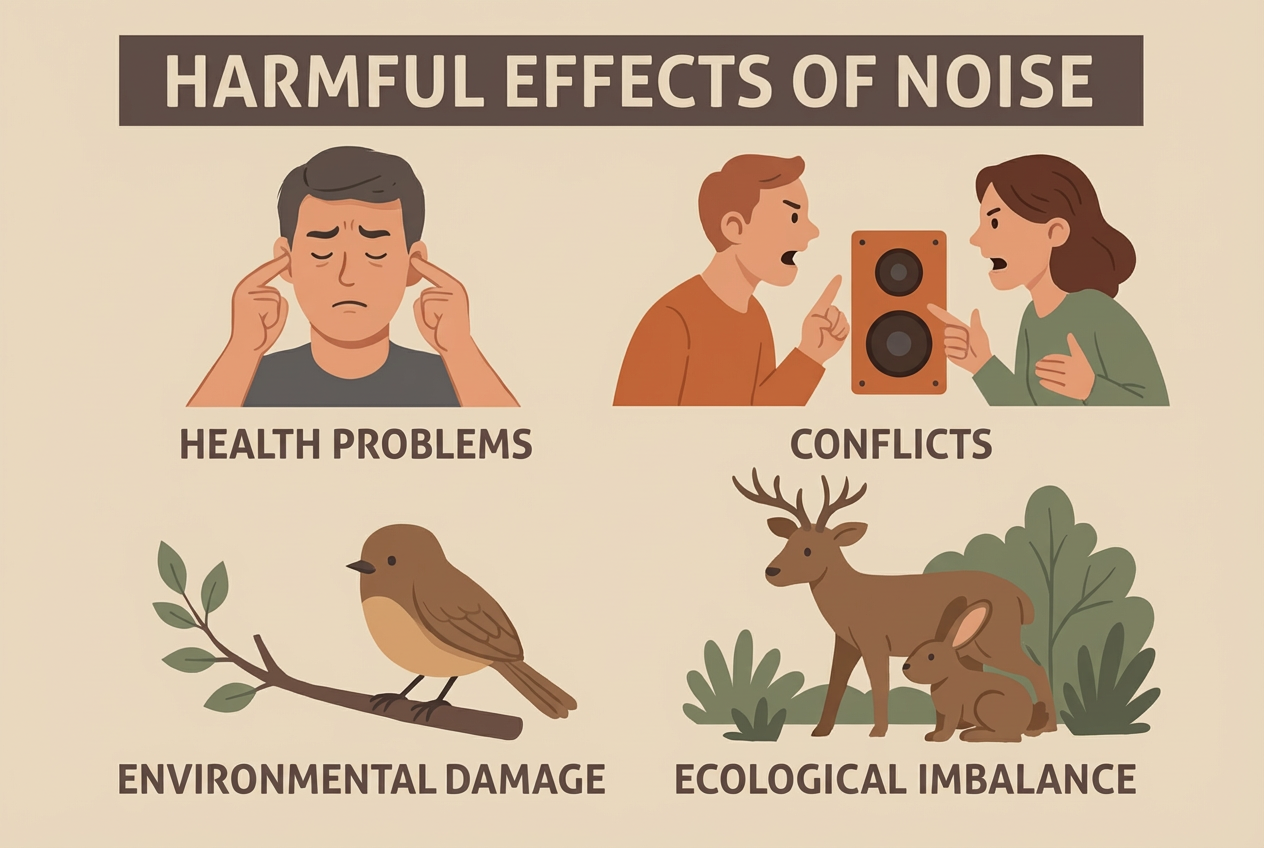
The image depicts four harmful effects of noise to include health problems, conflict, environmental damage, and ecological imbalance.
Noise pollution is often dismissed as a minor inconvenience, but its effects are far more serious. As shown in the image above, noise pollution impacts multiple areas of life, including human health, social relationships, and the environment. From increased stress and sleep disruption to conflicts between individuals and harm to wildlife, noise pollution is a widespread issue that affects both individuals and communities.
One of the most significant impacts of noise pollution is on physical health. Constant exposure to unwanted sound can increase heart rate, raise blood pressure, and contribute to long-term cardiovascular problems. In addition, noise disrupts sleep, which is essential for recovery and overall well-being. Poor sleep quality can lead to fatigue, difficulty concentrating, and a weakened immune system.
Noise pollution also has serious effects on mental health. Living in a consistently noisy environment keeps the brain in a state of alertness, which can increase stress, irritability, and anxiety. Over time, this constant stimulation can contribute to burnout and emotional exhaustion. The image highlights how noise can even lead to conflict between people, showing that its impact extends beyond individual health to social interactions.
Another important aspect of noise pollution is its effect on the environment. Animals rely on sound for communication, navigation, and survival. Increased noise from human activity can disrupt these processes, leading to changes in behavior, reduced reproduction, and even habitat displacement. This contributes to larger ecological imbalances and loss of biodiversity.
Despite these widespread effects, noise pollution is often ignored. Unlike air or water pollution, it is invisible, and many people have become used to constant background noise. However, normalizing noise does not mean it is harmless. As cities continue to grow and technology increases, the impact of noise pollution is likely to become even more significant.
Recognizing noise pollution as a public health issue is an important step toward change. By increasing awareness and taking steps to reduce noise at both the individual and community level, it is possible to create healthier, quieter environments. Noise pollution may be invisible, but its effects are real, and addressing it is essential for improving quality of life.
Hyperlinks: https://www.apha.org/policy-and-advocacy/public-health-policy-briefs/policy-database/2022/01/07/noise-as-a-public-health-hazard https://www.nature.com/articles/s41370-025-00748-4
 Writing About the Environment
Leave a comment