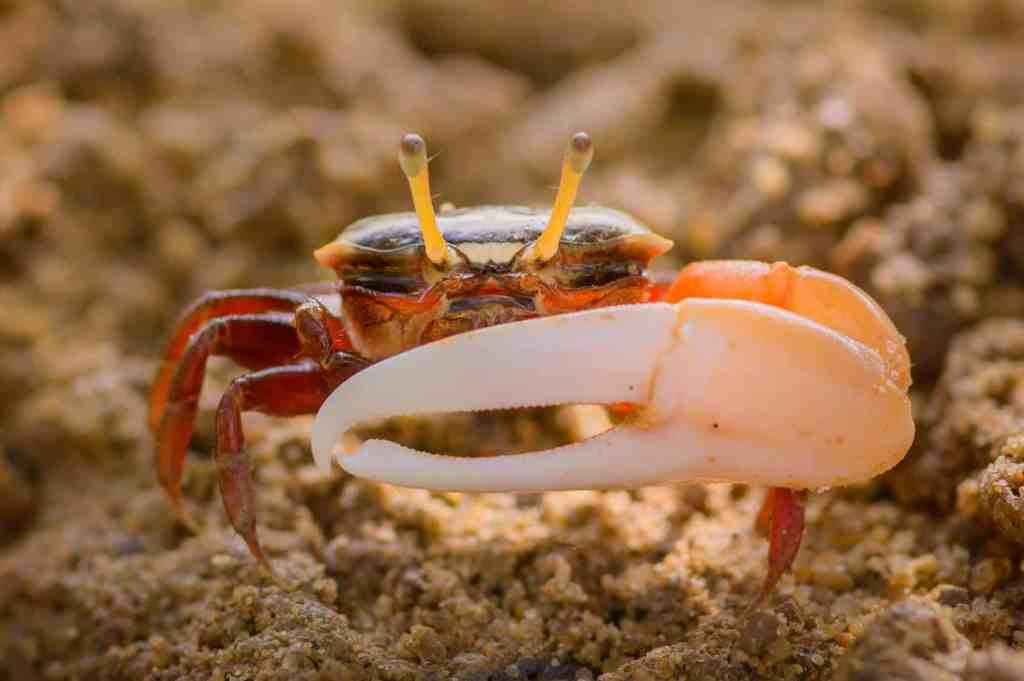
During recent studies it has been determined that a small crab named the fiddler crab that is between 1 inch and 2 inches in size, can tell us a lot more about microplastic degradation in the wild. According to the article What The Fiddler Crab Can Teach Us About Ocean Plastics by author John Spevacek, during a study of fiddler crabs they found that in the liver, pancreas/liver, and hindgut, they had microspheres. Microspheres are a primary form of microplastics that are often found in personal care items, personalized industrial applications, and scientific research. These particles are known for causing intestinal damage, and development issues in aquatic life. After their experiment they found that when crabs eat the microspheres, they degrade plastics both chemically and mechanically. This similar behavior can be found in other species such as krill and lobsters. In another article named Nature’s Answer On Microplastics published by Plastic Soup, they explain that during an experiment they found that microplastics accumulated in the fiddler’s crab body, with a concentration that was about 13 times higher than the sediments in the surrounding area. The particles in the crab were most commonly found in the hindgut of the crab. They also explain that the process in which crabs degrade plastic is much faster than the natural decomposition process. Although this may give people a bit more of hope, it also poses bigger risks for the future, such as these plastics being broken down in the nanoplastics that can be more easily passed through the food chain.
https://www.plasticsoupfoundation.org/en/blog/natures-answer-microplastics
https://www.plasticstoday.com/materials/what-the-fiddler-crab-can-teach-us-about-ocean-plastics
 Writing About the Environment
Leave a comment