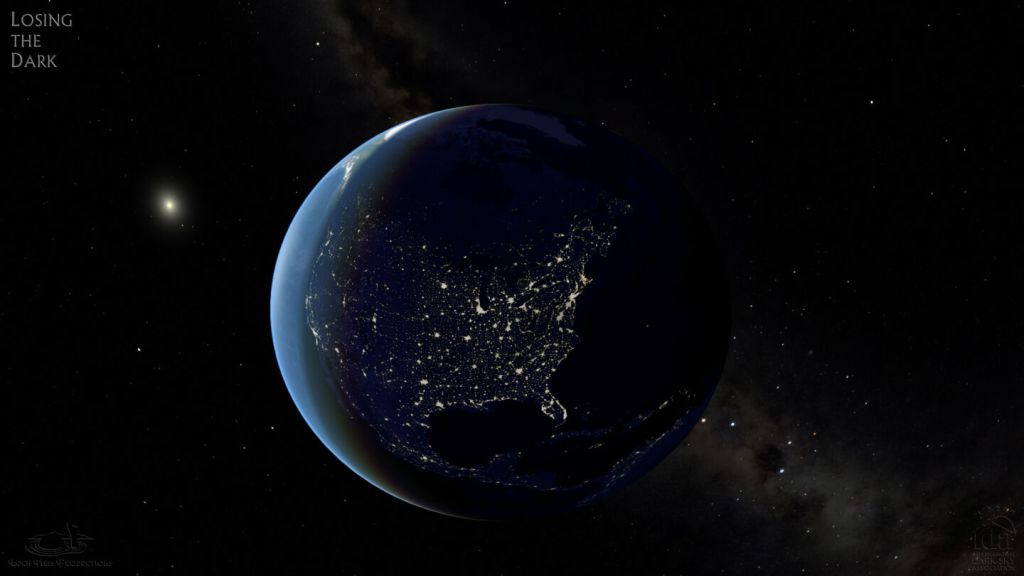
For billions of years, life on Earth has been defined by a simple, rhythmic pulse: the transition from day to night. Every plant, animal, and human has evolved under the predictable cycles of the sun, moon, and stars. But as a landmark special issue in Science titled “Losing the Darkness” points out, this fundamental cycle is under threat.
Artificial Light at Night (ALAN) is no longer just a convenience of modern life; it has become a global pollutant that is expanding in both intensity and geographic reach. Here is a look at what we are losing as the world gets brighter.
The Ecological Toll: A Disrupted Food Web
We often think of light as “safe,” but for many species, it’s a death trap. The research highlighted in this issue shows that light pollution is a major driver of the “insect apocalypse.” Many insects are fatally attracted to artificial lights, leading to exhaustion or predation.
This doesn’t just affect bugs; it ripples through the entire ecosystem:
Navigation: Sea turtles and migratory birds, which rely on celestial cues, find themselves disoriented by city glows.
Behavioral Shifts: Predators and prey alike find their hunting and hiding patterns disrupted, leading to a loss of biodiversity and the collapse of local food webs.
Human Health: More Than Just a Bad Night’s Sleep
Our bodies are hardwired to respond to darkness. When the sun goes down, our brains produce melatonin—a hormone critical for sleep, immune function, and regulating our internal “circadian clock.”
The Science special issue details how constant exposure to urban skyglow and blue-rich LED lighting suppresses melatonin production. The consequences are far-reaching, linked to:
Sleep deprivation and chronic fatigue.
Increased risk of metabolic disorders, such as diabetes and obesity.
A potential correlation with more serious conditions, including certain types of cancer and cardiovascular disease.
References
https://www.science.org/doi/10.1126/science.adi4552
 Writing About the Environment
Leave a comment