If Pay-As-You-Throw pricing systems work so well, why hasn’t every community adopted them?
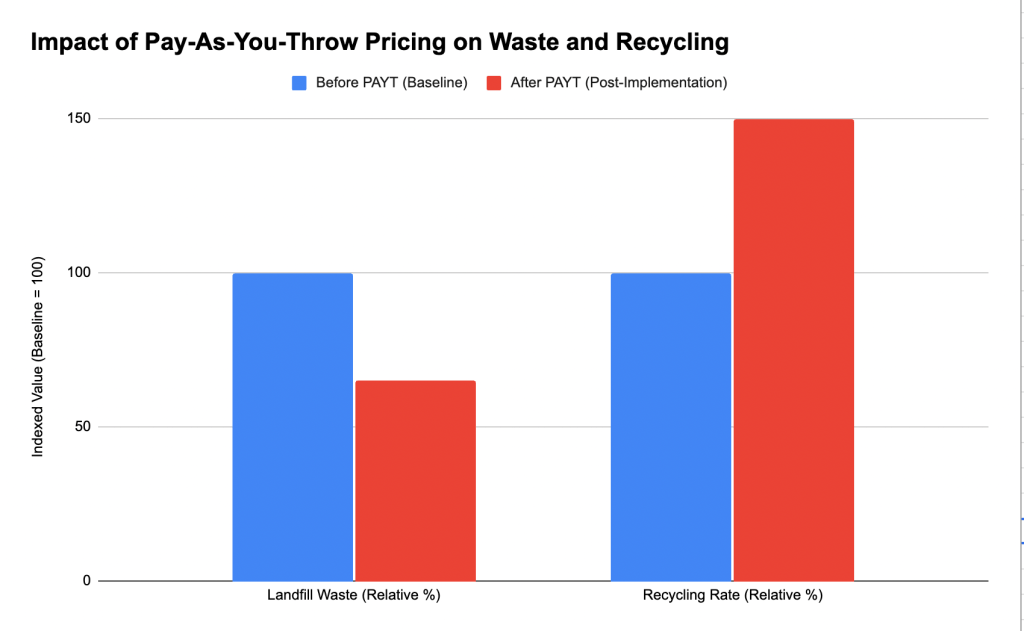
Across the United States, Pay-As-You-Throw pricing systems (PAYT) have been shown to reduce landfill waste and increase recycling rates. By charging residents based on how much trash they throw away, these systems create a clear financial incentive to waste less. Despite these environmental benefits, PAYT policies are controversial due to a few social and economic reasons.
One of the most common concerns is illegal dumping. Critics argue that when residents are charged for trash, some try to avoid fees by dumping waste in public spaces or using someone else’s bin. While research suggests this does happen, the scale is often smaller than expected. Studies estimate that illegal dumping accounts for only about 3–6% of waste changes, while overall landfill waste still decreases significantly . Overall, illegal dumping occurs, but it does not outweigh the broader environmental benefits.
A more complex issue is equity.
Because PAYT systems charge households per unit of waste, they can place a heavier burden on lower-income residents. Not all households have the same ability to reduce waste. Families with limited access to recycling services, larger purchasing options, or composting programs may end up paying more simply because they have fewer options.
This raises an important question: is PAYT fair?
Some communities have addressed this by redesigning their programs. According to the U.S. Environmental Protection Agency’s Pay-As-You-Throw overview, cities can reduce inequities by offering discounted trash bags to low-income households, expanding access to recycling, and increasing public education about waste reduction. These adjustments allow PAYT systems to maintain their environmental benefits while minimizing financial strain.
For Prince George’s County, this distinction matters. Any shift away from a flat fee system would need to consider not only how much waste is reduced, but also who bears the cost of that change. A policy that reduces landfill use but disproportionately impacts vulnerable communities risks creating new problems while solving another.
The challenge is not whether PAYT works. It’s whether it can work equitably.
 Writing About the Environment