
Picture a train for a moment. Do you see a steam engine crossing scenic vistas on wooden trestle bridges? Luxurious palaces on wheels like the Orient Express? Maybe a holdup by gunslinging cowboys in the American West?
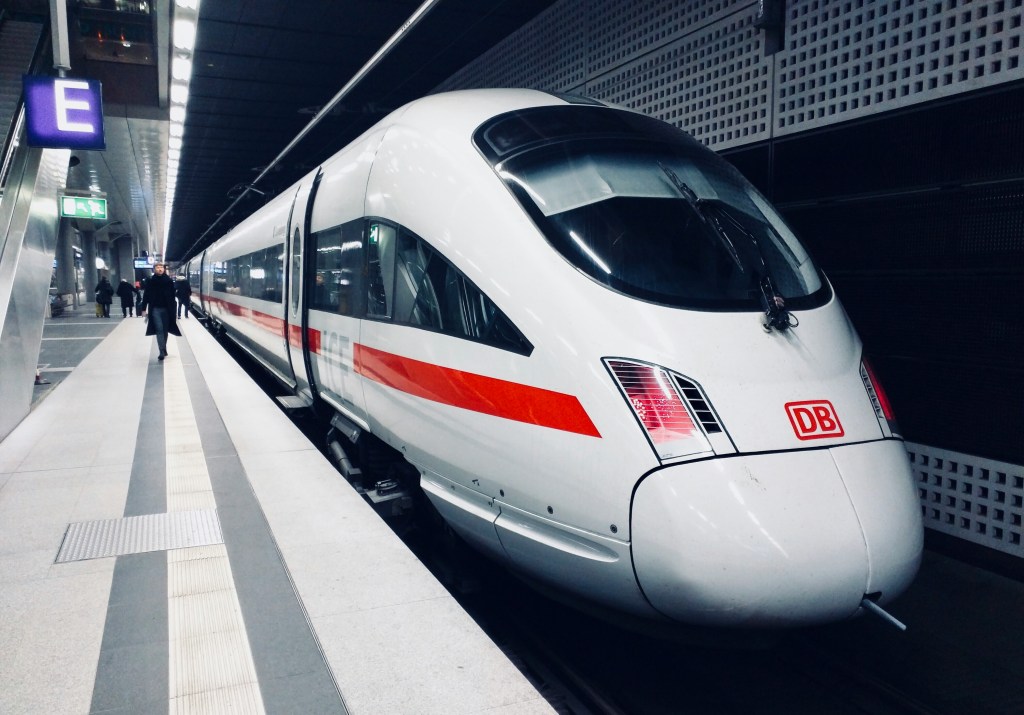
Returning to reality, American trains today are certainly a less extravagant affair than in times past. However, some American regions are transforming their trains into sleek, electric-powered destinations in their own right. Drawing from international experience, rail has emerged as an affordable, sustainable, and enjoyable alternative to driving and flying, and the United States is slowly starting to hop onboard.
Many Americans misunderstand trains because they have never been exposed to a high-quality domestic rail experience. While the United States used to have some of the best railroads in the world, a variety of economic and political factors whittled their status to a skeleton of former days. Still, railroads retain several key advantages over the automobile and the airplane that make trains more sustainable.

New rail lines are often electrified using overhead power lines, meaning rail becomes more sustainable as the electric grid decarbonizes. Also, energy dissipated to slow the train can be returned to the overhead lines, reducing energy waste when braking. Plus, electric trains can accelerate and decelerate faster than diesel ones often used in America today, meaning shorter trip times for passengers.
While electric vehicles have to lug around a massive battery, overhead lines reduce train weight and thus allow for faster speeds while reducing infrastructure wear and tear. When compared to conventional cars, trains completely avoid the surging gas prices seen in recent weeks, reducing consumer costs.
Cities and towns nationwide were built around railroad stations, meaning stations today are often centrally located and more convenient to access than far-flung airports outside the city. Thus, emissions from “first and last-mile” trips to and from the train station are often less than those required to reach the nearest airport.

Also, trains cannot fall out of the sky and thus don’t subject travelers to the lengthy security procedures necessitated for air travel. This advantage for trains has become all the more apparent in light of the recent funding lapse and subsequent security meltdown occurring at airports throughout the United States, which has caused travelers to wait hours to enter security.
Trains provide immense reductions in carbon footprint and improvements in convenience. A rail resurgence is slowly gaining momentum, and everyone’s vote and transportation choices will help shape the future of American transportation to be more convenient and sustainable for generations to come. Continuing to underinvest in America’s railroads means being left further behind by countries across Europe, Asia, the Middle East, and Africa. Why not follow the data and fund more rail?
 Writing About the Environment