Our Chesapeake Bay health can be reflected in the agricultural practices we employ in close proximity to the bay. Poor agricultural practices lead to nutrient runoff into the bay, resulting in eutrophication that harms the local environment and economy. The runoff from agricultural practices, mainly from farms, is detrimental to the bay’s health, causing eutrophication. Eutrophication leads to a lack of nutrients in the bay, causing fish and plants to suffer greatly. The bay can become an ecological dead zone.
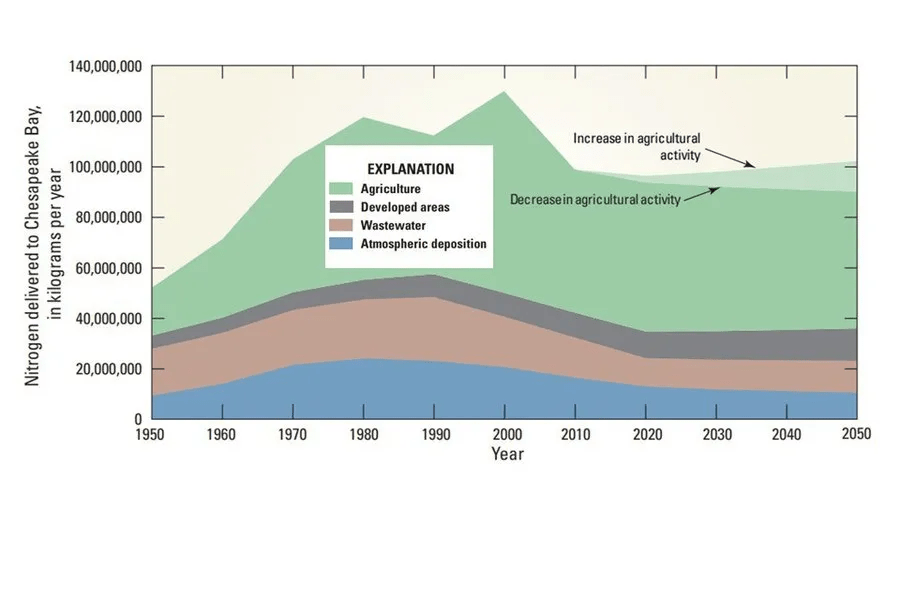
This figure found on Penn State’s website shows the trend of nitrogen delivered into the bay between the years 1950 and 2050. It also shows how much we can decrease with our efforts or the increase in our poor agricultural practices.
Nitrogen, phosphorus, and sediment enter the Chesapeake through agricultural runoff. This causes a dip in the bay’s health, which not only harms the biodiversity of the bay, but talso hose who make a living off the bay.
The urban development environmental impact is no longer a distant concern — it is actively reshaping how cities function, grow, and interact with surrounding ecosystems.
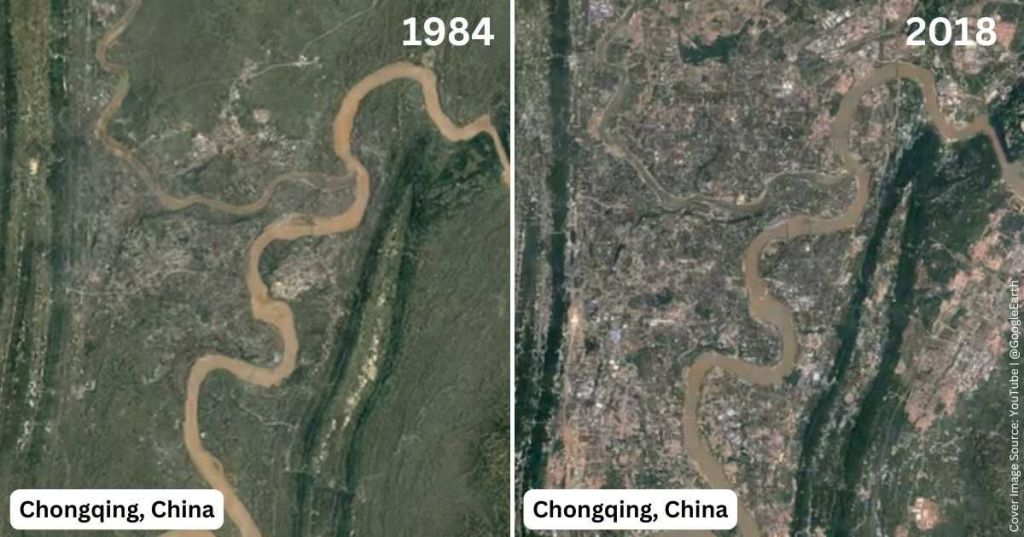
A recent global analysis of thousands of cities shows that urban expansion is driving rising energy demand, infrastructure pressure, and ecological disruption at an unprecedented scale. As development spreads outward, natural land is converted into built environments that alter water systems, increase heat retention, and intensify resource consumption. These changes accumulate over time, creating environmental stress that cities must continuously manage.
At the same time, research on urban sustainability highlights how rapid development often occurs in regions already facing climate vulnerability. Expanding populations, dense infrastructure, and limited planning capacity combine to amplify environmental risks such as flooding, pollution, and heat exposure. In many cases, urban growth concentrates environmental pressure rather than distributing it evenly.
Land and ecosystems changing as cities expand, shown through a regional environmental map.
Together, these findings show that the environmental consequences of urban growth are not isolated side effects. They are structural outcomes of how cities expand. Land conversion, infrastructure demand, and climate stress interact in ways that reshape entire regional ecosystems.
Urban planning increasingly includes sustainability goals and resilience strategies. However, many planning systems were designed for slower, more predictable growth patterns. Rapid expansion is outpacing those assumptions.
The central issue is no longer whether development affects the environment. The challenge is whether planning systems can adapt quickly enough to manage the environmental pressures urban growth is already creating.
Let us address one of the most significant barriers to combating climate change: bureaucracy. This problem stems primarily from the excruciatingly long delays in obtaining permits and building transmission lines. Consider a beautiful solar farm ready to power your neighborhood, but it sits idle because we can’t figure out how to connect it to the grid. It’s absurd and causes a significant bottleneck in the process. This is a critical issue that must be addressed. However, the landscape has shifted dramatically in the last few months. If you’re still focused solely on the permitting bottleneck, you’re overlooking a larger and more concerning issue. It’s no longer just a plumber being late; it feels like someone is attempting to set the house on fire.
Let me illustrate my point with two surprising stories from this summer.: Story Number One: The “One Big Beautiful Bill” (Yes, That’s Its Name). Our colleagues at the REPEAT Project at Princeton analyzed the new Republican budget bill, known as the “One Big Beautiful Bill Act,” and the findings are concerning. This bill doesn’t merely slow down clean energy initiatives; it reverses progress and accelerates the decline. Specifically, it proposes cutting $500 billion in clean energy investments and will result in 300 gigawatts less solar and wind power by 2035. To put that into perspective, this is equivalent to constructing every solar farm and wind turbine currently in existence and then discarding them all.
While we are preoccupied with finding ways to connect ongoing projects, this bill is effectively ensuring that there will be no projects left to connect. It’s a legislative robbery of our future. Story Number Two is The “Dagger.” This story is even more astonishing. Do you recall the record-breaking heat wave we faced this summer, the one that felt like the sun was bearing down on us with intention? Well, in the midst of that, the EPA made a shocking announcement. They proposed to repeal the “endangerment finding.” Although it may sound like legal jargon, this finding, established in 2009, is the only reason the EPA has the authority to combat climate change. It serves as the scientific and legal foundation that asserts, “Carbon pollution is detrimental to public health, so we have the power to regulate it.” Lee Zeldin, the new head of the EPA, chose the height of a nationwide heat wave to make this announcement. His statement? He declared they were “driving a dagger straight into the heart of the climate change religion.” A dagger. Into the heart.
This isn’t merely about delays in allowing; it’s about a person in a suit and an office actively trying to undermine the government’s ability to safeguard our air quality. He contends that the Clean Air Act doesn’t actually apply to… air. This is a legal last resort that would essentially inform the EPA, “Sorry, your hands are tied. Good luck enduring those 110-degree days!”
So here’s the situation: We can still be rightly outraged about the issues surrounding transmission lines. We absolutely should! It’s a frustrating problem that could be resolved. However, at this moment, it’s not our primary concern. The main event consists of a coordinated two-part attack. One part involves a bill that cuts funding for clean energy initiatives. The other part is a legal maneuver designed to ensure that the government can never address this issue again. When we talk about the bottleneck, it assumes that we all have the same destination in mind. However, these actions demonstrate that we do not. Some individuals are not concerned about the traffic jam; they simply do not want anyone to make the journey at all.
Nuccitelli, D. (2025, August 1). The Republican campaign to stop the U.S. EPA from protecting the climate. Yale Climate Connections. Read the full article here
Have you ever paid more for a product labeled “carbon neutral”? Everyone who cares about the environment has paid more for ‘carbon neutral’ products while assuming that this has been independently verified. Often, this is not the case. Companies practice “corporate green washing”, sending out claims about environmental impact that have not been checked, so they can gain eco-conscious buyers. This practice has grown along with the growth of consumer demand for eco-friendly products. Sadly, the current regulations are not up to date.
Corporate Greenwashing and Consumer Deception: What’s Actually Happening
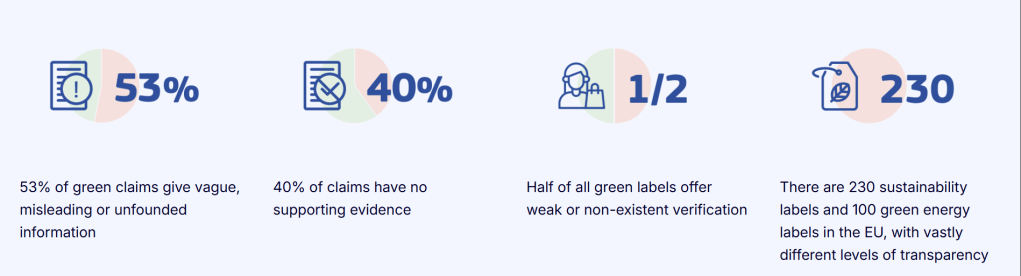
Source: European Commission, DG Environment, 2023
Greenwashing occurs when a company, without any proof or verification, claims in its marketing that its products are environmentally friendly. Examples can include “carbon neutral”, “green,” and “sustainable,” which can be used without any legal repercussions or independent verification. No company is required to verify the accuracy of these claims when they are placed on a label.
The FTC’s Green Guides haven’t been updated since 2012. A revision was promised for 2024 and never arrived. These companies know they can say whatever they want about their products regarding environmental impacts and get away with it.
Why Should You Care?
You vote with your wallet for a more sustainable world if you are a consumer who cares about labels like sustainability or something similar. If companies lie and greenwash their products, they are trying to control your vote. Also, this punishes the companies that actually try to invest in sustainability. This blog, over the next few weeks, will go even deeper into this topic and expose the companies that participate in greenwashing the most and how we could hold them accountable.
Artificial intelligence often feels invisible. We type a prompt into a chatbot, generate an image, or get recommendations online, and the result appears instantly. But behind those quick responses are enormous buildings full of computers running nonstop. As AI becomes more common in everyday life, AI data center energy use is growing rapidly and beginning to raise concerns about electricity demand and environmental impact.
Sergiusz Pimenow explains that AI systems need a huge amount of computing power to train and operate. That power comes from large data centers that require constant electricity to keep servers running and cooled. Researchers studying the energy consumption challenges of artificial intelligence note that the expansion of AI technology is closely tied to rising energy use, which can complicate global efforts to reduce emissions and transition to cleaner energy systems.
Energy planners such as Xien Chenare also watching how these facilities interact with local power grids. A recent analysis of electricity demand and grid impacts of AI data centers explains that large computing clusters can create concentrated spikes in electricity demand. For utilities trying to plan long-term energy supply, that kind of demand growth can make infrastructure planning more complicated.
The impacts are not limited to tech companies. Communities that host new data centers may see increased electricity demand and pressure on local energy systems. In some places, this could slow the shift toward renewable energy or require new power infrastructure.
AI is often described as a digital revolution, but the systems that support it are very physical. Looking at AI data center energy use helps reveal the hidden infrastructure powering the tools.
Alt text:
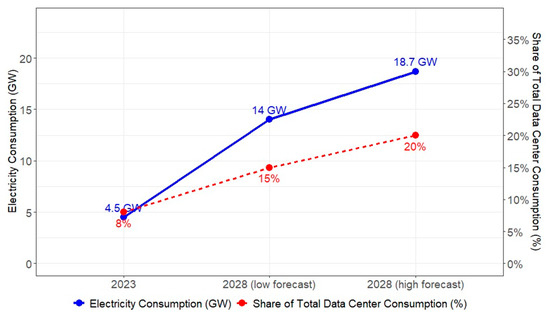
Line graph showing AI data center electricity consumption increasing from 4.5 gigawatts in 2023 to between 14 and 18.7 gigawatts by 2028, while its share of total data center electricity use rises from 8% to as much as 20%.
References
Chen, X., Wang, X., Colacelli, A., Lee, M., & Xie, L. (2025). Electricity demand and grid impacts of AI data centers: Challenges and prospects. arXiv. https://arxiv.org/pdf/2509.07218
Popescu, C., & colleagues. (2024). Challenges of artificial intelligence development in the context of energy consumption and impact on climate change. Energies. https://www.mdpi.com/1996-1073/17/23/5965
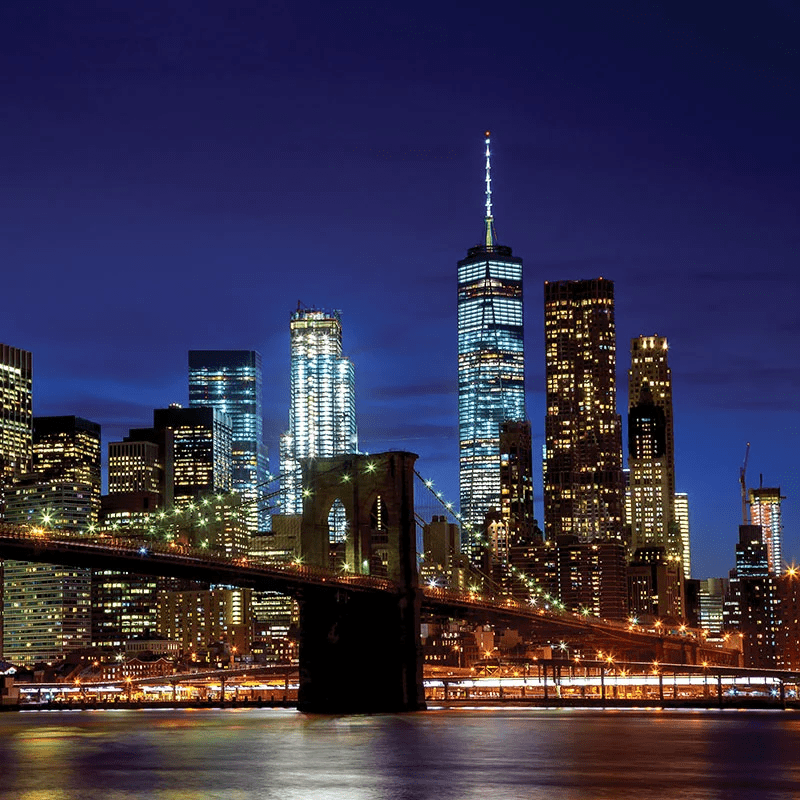
Have you ever wondered why the night sky isn’t as bright anymore? Instead of seeing stars, we often see a vast sea of darkness. This change is largely due to light pollution, which refers to excessive or misdirected artificial light that brightens the night sky and interferes with natural darkness. Light pollution is one type of pollution that surrounds us every day but often goes unnoticed because it has become normalized in modern cities.
Although artificial lighting provides safety and convenience in the modern age, it has a detrimental effect on human health. For example, exposure to artificial light at night can disrupt the body’s natural sleep cycle by interfering with the production of melatonin, the hormone responsible for regulating sleep. The disruption of sleep can lead to a vast number of health effects, such as irritability, depression, forgetfulness, and more.
There are simple ways to mitigate the effects of light pollution, including using LED lights, avoiding staying up late and embracing the dark at bed time.
Renting solar may sound like a weird abstract topic, but it’s actually one of Maryland’s ways to bring Low to Medium Income(LMI) households into the solar array. Through the Maryland Community Solar Program, residents can subscribe to a shared solar farm and receive solar credits on their electric bill. This is perfect for those in an atypical solar situation where, instead of needing to own land, a building, or an ideal roof, they can benefit from a large solar project.
How it Works
The first step in this process is generating solar energy: Your portion of the solar farm generates electricity and sends it to the grid.
Second is the electric bill: Your electric company will apply your solar earnings and then charge you the remainder of the bill.
Finally, the solar company: The company that provides the solar farm will bill you for the credits earned at a discount(5-25%).
After reading this, you may ask: If I’m renting solar, what happens to the bill during cloudy months?
In Maryland, you aren’t actually paying to rent the space, but you’re paying for the solar credits your space produces. This makes it a big win for those in LMI housing, eliminating risks and upfront costs that installing your own solar can bring.
Major cities are mostly all dealing with this environmental issue which is air pollution. Being that New Delhi is one of the main ones, they have decided to experiment with a unique solution: installing mist systems over streetlights.
A recent Times of India article reported that Delhis Public Works Department (PWD) plans to install sprinklers and misting systems on 1,000 light poles.
Times of India, 2026
The way these systems work is by spraying tiny droplets into the air which then brings the dust back on to the ground. All the congestion and construction causes dust and debris in the air which is a big source of the significant pollution.
They hope to reduce the amount of dust the people intake through their day to day.
The PWD has installed 271 sprinkler units and 305 mist spraying systems throughout the capital. They also plan to develop green walls and vegetation covers at 47 roundabouts.
Furthermore, the sewage water from nearby waste treatment plants to water these new green spaces. By doing so they hope to alleviate the concerns many big cities face when trying to implement new environmental practices. By using recycled water they are able to cut back on the demand of the water supply.
Although these new mist sprays can’t eliminate the air pollution completely they do showcase how they plan on enhancing their urban design. Since air pollution is such a major concern in India, it will take many initiatives to actually reduce it but I am really pleased to see the effort.
According to the World Health Organization air pollution causes seven million premature deaths around the world each year. Which is why making these changes is incredibly important for the people and life quality.
I am interested to see how these systems improve the air quality, and if the city is able to keep up with it. As someone who travels to India almost every year I am looking forward to feeling a difference in the air.
Keywords: Air Pollution in India, New Delhi Air, Urban strategy
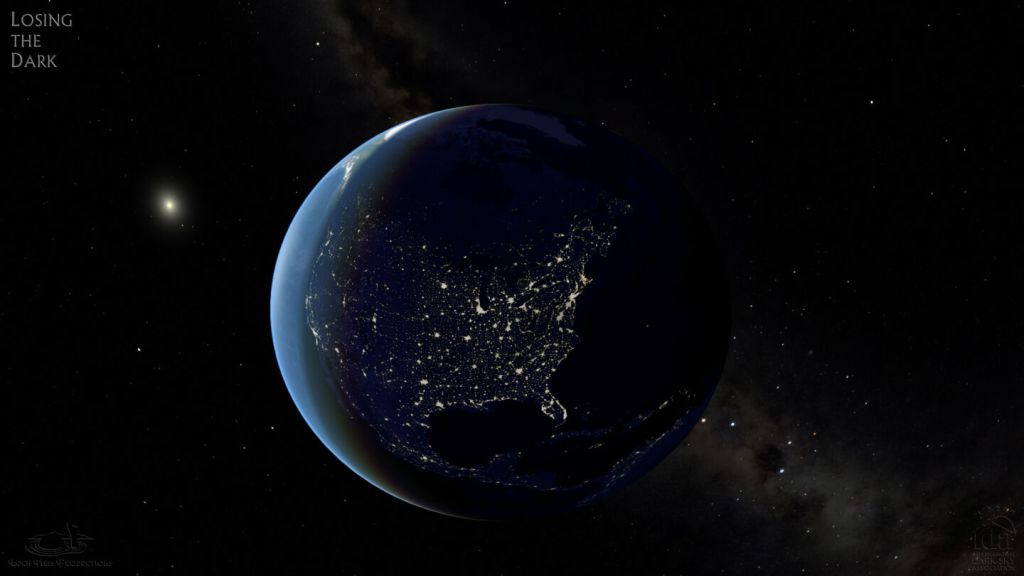
For billions of years, life on Earth has been defined by a simple, rhythmic pulse: the transition from day to night. Every plant, animal, and human has evolved under the predictable cycles of the sun, moon, and stars. But as a landmark special issue in Science titled “Losing the Darkness” points out, this fundamental cycle is under threat.
Artificial Light at Night (ALAN) is no longer just a convenience of modern life; it has become a global pollutant that is expanding in both intensity and geographic reach. Here is a look at what we are losing as the world gets brighter.
The Ecological Toll: A Disrupted Food Web
We often think of light as “safe,” but for many species, it’s a death trap. The research highlighted in this issue shows that light pollution is a major driver of the “insect apocalypse.” Many insects are fatally attracted to artificial lights, leading to exhaustion or predation.
This doesn’t just affect bugs; it ripples through the entire ecosystem:
Navigation: Sea turtles and migratory birds, which rely on celestial cues, find themselves disoriented by city glows.
Behavioral Shifts: Predators and prey alike find their hunting and hiding patterns disrupted, leading to a loss of biodiversity and the collapse of local food webs.
Human Health: More Than Just a Bad Night’s Sleep
Our bodies are hardwired to respond to darkness. When the sun goes down, our brains produce melatonin—a hormone critical for sleep, immune function, and regulating our internal “circadian clock.”
The Science special issue details how constant exposure to urban skyglow and blue-rich LED lighting suppresses melatonin production. The consequences are far-reaching, linked to:
Sleep deprivation and chronic fatigue.
Increased risk of metabolic disorders, such as diabetes and obesity.
A potential correlation with more serious conditions, including certain types of cancer and cardiovascular disease.
In the US, there are roughly 150,000 public water systems (PWS) that serve people for at least 60 days a year. Community water systems (CWS) serve the same population as PWS but over the course of a year. Non community systems serve places such as restaurants. CWS serves about 95% of the population in the US. Although this accounts for most Americans, CWS are not evenly distributed across service-sized populations.
Contrary to what you might think, the WHO does not actually recommend a uniform international enforceable standard for drinking. With the increasing amount of industrial activity humans are engaging in, this has made contamination in water a more important issue than in years past.
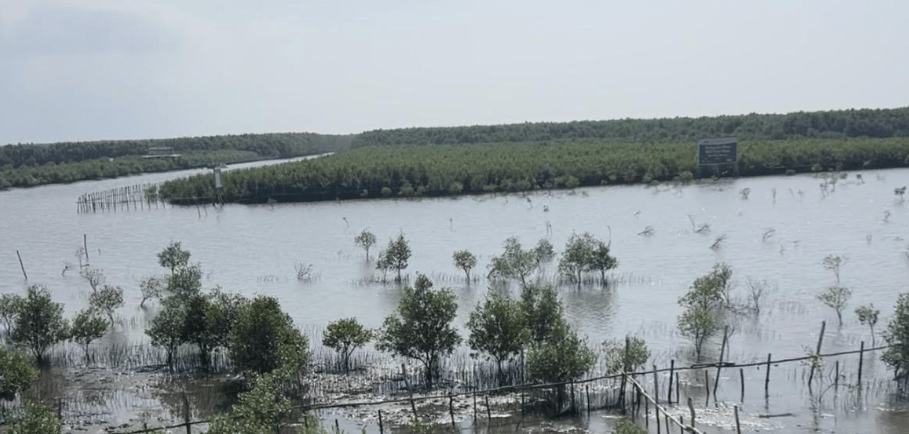
Mangrove planting efforts in Mui Ca Ma National park.
The Power of the Mangrove: Nature-based Solutions for Climate Displacement
Climate displacement is when communities are forced to migrate due to the effects of climate change, such as sea level rise, prolonged heat waves and droughts, and more frequent intense natural disasters. One method to adapt to these climate risks are nature-based solutions, which are natural interventions to help sustain and fortify natural ecosystems.
In South Pakistan, government initiatives have led to the planting of mangrove forests as a so-called ‘green sea wall’. These mangrove forests help to stabilize the coastline; preventing erosion, providing a habitat for fish and birds, and buffering against storms.
When I went to Vietnam, one of the biggest environmental initiatives was to replant the mangrove forests along the Eastern coast. Solutions that incorporate nature are often highly effective solutions as it is beneficial for humans, the environment, and often our economies.
In the fight against climate change, it is vital we utilize all of the tools we have available, including mangroves gnarly roots.
What determines whether a neighborhood has access to fresh, healthy food? Is it location, economics, or something deeper rooted in history and policy? In many communities across the United States, the answer is tied to environmental injustice. Access to quality food isn’t distributed equally, and the places where grocery stores invest, or choose not to invest, often reflect long standing social and economic disparities.
My name is Mikias Eticha and in this blog, I explore the reality of food deserts and environmental injustice through the lens of my own experience living in Prince George’s Country, Maryland. From noticing the differences in grocery stores just a short drive apart to examining policies that shape food access across the country, this blog looks at how systemic issues affect what food reaches our communities.
I will also discuss how urban agriculture and policy solutions can help address these inequalities. By looking at local experiences alongside national examples, the goal of this blog is to highlight why fair access to fresh, affordable food matters, and what steps communities and policymakers can take to create a more just and sustainable food system.
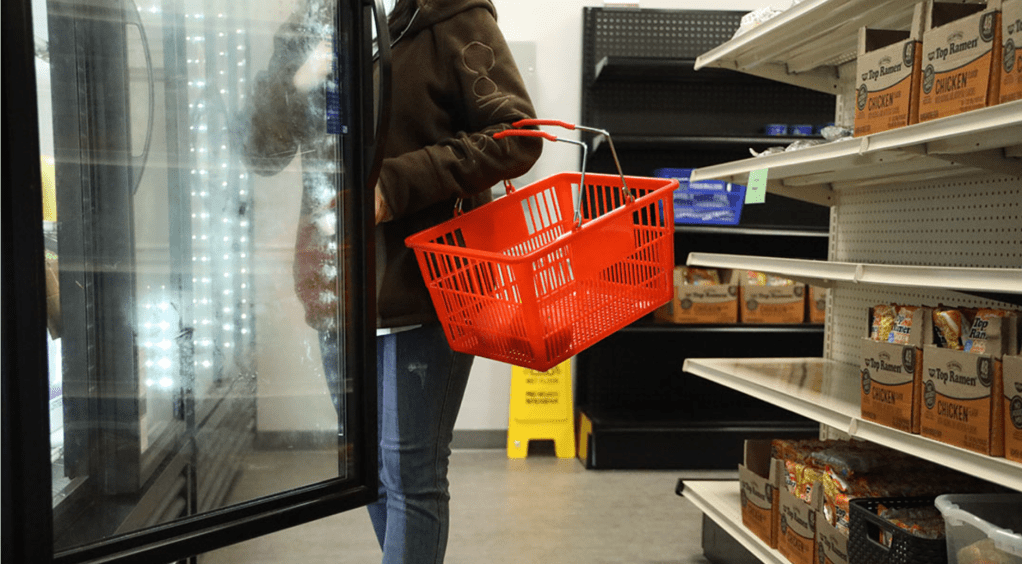
Living in PG County, the fight for fair access to fresh, affordable food feels personal. You don’t have to read a report to see the disparity; you just have to drive. I’ve experienced the produce difference firsthand: the Costco in Brandywine, MD, just doesn’t compare to the one in Pentagon City. Up in Arlington, the shelves are stocked with a wider variety of organic produce, and the surrounding area is dense with Whole Foods, and Trader Joe’s. Here in PG County those options are sparse. The only common denominator? Demographics. PG county has a larger Black community, and the lack of investment in our grocery infrastructure is a glaring example of environmental injustice.
This isn’t just about inconvenience; it’s about a system that tilts the scale against communities of color. That’s why a recent legislative move in New York caught my attention. According to the Institute for Local Self Reliance, the New York State Assembly is advancing the Consumer Grocery Pricing Fairness Act. This bill aims to stop price discrimination. A predatory practice where giant chains can bully suppliers for lower prices, squeezing independent grocers and raising costs for everyone else (“New York Advances”) If we had stronger protections like this in Maryland, maybe we could support the small markets that have served our neighborhoods for generations, instead of watching them get pushed out by corporate consolidation.
We see the fallout of this broken system nationwide. In Columbia, South Carolina, food insecurity has spiked to nearly 14.4% surpassing the national average. As Cindye Richburg-Cotton, executive director of the Brookland Lakeview Empowerment Center, “abundance of unhealthy stores” (Bramlett). This is exactly what we face in parts of PG County. We nee systemic change. While I’ll keep advocating for local solutions and urban agriculture to feed our community, we also need the legal tools to fight the corporate gatekeepers who control what food reaches our tables.
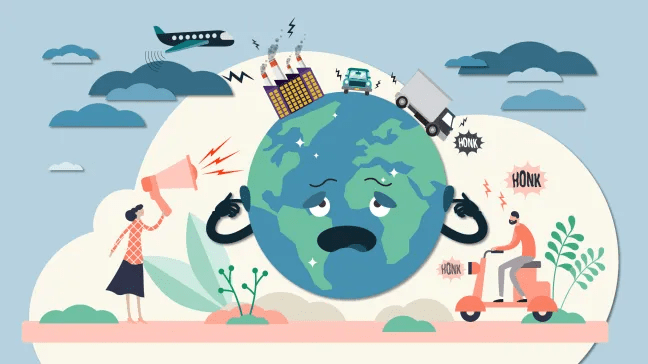
An exhausted Earth attempts to block out noise pollution by plugging it’s ears (Source: GlamBlog)
Noise pollution is something that most people experience every day but rarely stop to think about. Even though many people see it as just an annoyance, research shows that noise pollution can have serious effects on human health and overall well-being.
One of the most obvious impacts of noise pollution is hearing damage. Being around loud sounds for long periods of time, especially noises above 85 decibels, can permanently damage the inner ear. This risk is especially high for people who work in loud environments, but even everyday city living can slowly affect hearing over time.
Noise pollution also affects the body in ways that people may not immediately notice. Constant exposure to loud or disruptive sounds triggers the body’s stress response. When this happens repeatedly, it can raise heart rate and blood pressure. Over time, this added strain on the body increases the risk of cardiovascular problems such as hypertension and heart disease. In this way, noise pollution doesn’t just bother people, it can contribute to serious long-term health conditions.
Sleep is another area where noise has a major impact. Even relatively quiet background sounds can interrupt sleep cycles and make it difficult to get deep, restful sleep. People who live in noisy areas often experience trouble falling asleep, frequent waking during the night, and feeling tired throughout the day. Poor sleep quality can weaken the immune system, make it harder to concentrate, and negatively affect mood.
Mental health is closely connected to environmental noise. Living in nonstop noisy surroundings can increase feelings of stress, anxiety, and irritability. When the brain never gets a break from processing sound, it becomes harder to relax. Over time, this can contribute to anxiety disorders, depressive symptoms, and overall emotional exhaustion.
Beyond specific health problems, noise pollution reduces overall quality of life. It can make conversations difficult, interfere with studying or working, and limit opportunities to relax. Persistent noise can make environments feel overwhelming, which affects both productivity and well-being.
Fortunately, noise pollution is a problem that can be reduced through better city planning, stricter noise regulations, more green spaces, and improved building designs. Recognizing noise pollution as a real public health issue is an important step toward improving everyday life.
For the following weeks, my blog posts will be discussing the Nigerian oil industry and its short-term and long-term effects on the Nigerian environment. This week’s post, I’ll be giving an overview of one of Nigeria’s well-known public emergencies: the 2011 Oil Spill, and summarizing the impacts it had on the environment and what current discussions are taking place.
Overview
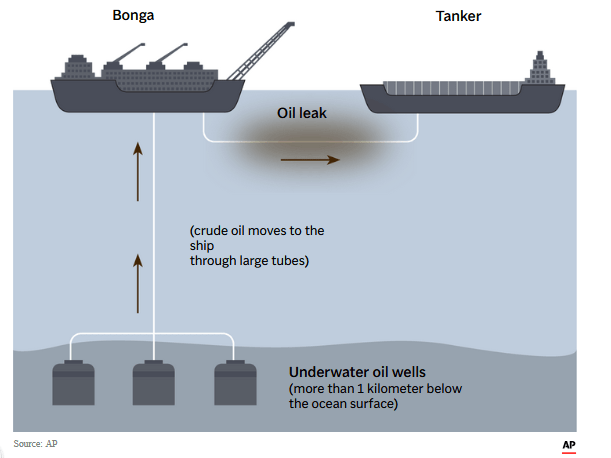
On December 20, 2026, a pipe from Shell’s production ship/oilfield Bonga leaked to a tanker. The leak would go unnoticed for four hours, after 40,000 barrels of oil had spilled into the Atlantic, tainting almost all of the coastal region of Ogoniland’s water (Davey, par. 2). This is just one of the several spills the area has experienced over the decades.
The Ogoniland people still feel the effects to this day. Drinking from the contaminated water has lead multiple health complications and a rising death toll among locals in the past years (EHN, par. 4). Shell is also dealing with a consequence like the 2022 review that found the issues with the same systems involved in the oil spill (Davey par. 5). Prominent issues included corrosion, inadequate firefighting protocols, and “lack of clear and established standard and processes” (Davey, par. 5). The Shell company responded saying accidents on the Bonga have only been a decline of since 2018. Oil spills specifically dropped by 90%.
Most people misunderstand liquid natural gas (LNG) terminals because they are framed as clean energy exports, when in reality they extend fossil fuel dependence and increase local environmental risks. Understanding how LNG terminals operate and who bears their environmental costs is essential for communities and policymakers deciding the future of U.S. energy infrastructure.
These terminals cool natural gas to extremely low temperatures so it can be shipped overseas. This process requires large amounts of energy and produces a lot of greenhouse gas emissions. The construction and operation of these facilities usually take place near coastal areas that already face pollution from power plants and oil refineries. People may experience increased air pollution, noise, and safety concerns from constant terminal activity. Environmental advocates also warn that increasing LNG exportation could keep the United States in decades of continued fossil fuel production. As overall demand for cleaner energy increases, many experts argue that we should instead focus on renewable energy to maintain certain infrastructures.
Most of us don’t think about trash once it leaves the curb.
But where does it actually go? Who decides what gets recycled, buried, or burned? And how do those decisions affect public health and the environment?
I’m Shreya, a senior studying Public Health Science at the University of Maryland. I’ve become increasingly interested in how waste management systems, recycling programs, and landfill policies shape environmental outcomes in communities.
Outside of school, I’m also a very proud older sister to twin brothers who just turned one, which constantly reminds me that the environmental policies we create today will shape the world they grow up in.
Through this blog, I’ll be exploring the systems behind our trash ,from recycling myths to landfill policy ,and asking what smarter, healthier waste systems might look like.
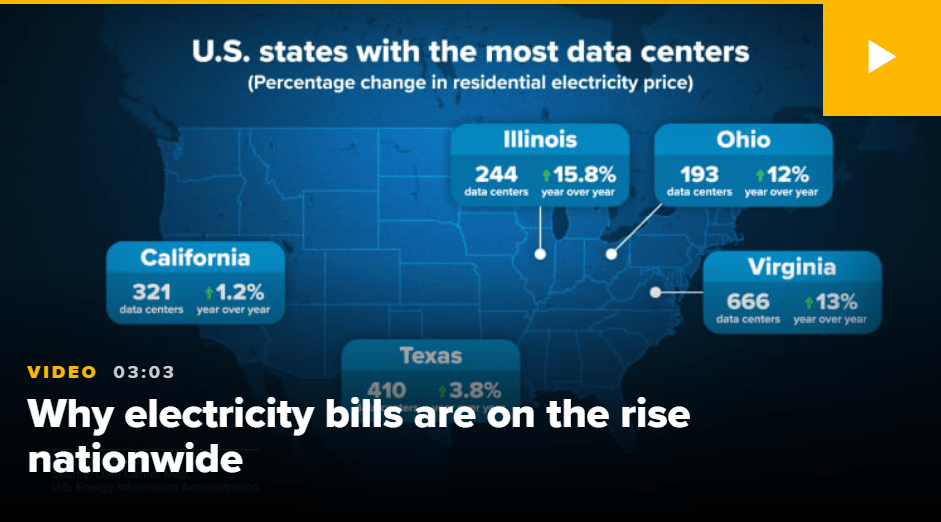
When examining how Artificial Intelligence is being integrated into our lives and jobs, it becomes clear that certain citizens are affected more than others. According to a recent CNBC article, President Trump and his administration have noted that energy consumption and prices are soaring. While the administration has stated they are working with top companies to ensure that the massive data centers being built on new plots of land will not negatively impact the public’s energy and water supply, the reality on the ground is different.
The White House has stated they will require these companies to independently fund and provide their own energy sources. However, the financial impact is already being felt: ‘Electricity prices are forecast to rise 6% through 2026 and another 3% in 2028 as data center demand grows more rapidly than power supply, according to a Goldman Sachs report.’ Across the U.S., cities are already experiencing spikes in utility bills following the addition of these facilities.
Because the push for AI is driven by large corporations and supported by the current administration, many states want to welcome the positive impacts of AI. Yet, a significant question remains: who is going to fund them? This has created a divide over land acquisition, especially regarding vacant strip malls or former business hubs. Our state’s energy grids thrive on high traffic areas like food, clothing, and service hubs that generate local economic activity. When these are replaced by data centers that require massive upkeep and strain the grid, the cost burden often falls on surrounding homeowners rather than those reaping the monetary rewards.
Nationwide increase in energy bill, are centers requiring too much?
As we look at the negative effects of AI-centred and othere form of digital infrastructure, we are also confronted with people believing that there is good use of it. With the integration of software and AI assistance, the real estate world is looking to integrate AI as a form of security for those who own properties.
Marine life with headphones on (AI generated) from Awesome Ocean
Noise pollution, defined as unwanted or harmful levels of sound in the environment, poses significant threats to wildlife. Various studies have highlighted its detrimental effects on different animal species, particularly in marine and terrestrial environments. This blog lists 5 consequences that noise pollution has for wildlife.
1. Disruption of Communication
Many animals rely on sound for communication, whether it be for mating calls, warning signals, or social interactions. Noise pollution can mask these important sounds, making it difficult for animals to hear one another. For instance, marine animals like whales and dolphins use echolocation to navigate and hunt. Increased background noise from ships and industrial activities can interfere with these signals, leading to disorientation and reduced hunting success.
2. Impacts on Breeding and Parenting
Sound carries different meanings in the animal kingdom, especially during breeding seasons. Noise pollution can hinder mating calls, reducing reproduction rates. Furthermore, parent birds, for example, may struggle to communicate with their chicks, impacting the survival rates of their young. Studies have shown that some bird species alter their songs or breeding behaviors in response to louder environments, often leading to decreased reproductive success.
3. Stress and Behavioral Changes
Exposure to constant noise causes stress in animals, which can affect their overall health and behavior. Stress responses can result in increased heart rates, altered hormone levels, and changes in feeding habits. Animals flee their habitats to seek quieter environments, which leads to increased competition for resources in less polluted habitats.
4. Altered Predator-Prey Dynamics
Noise pollution can also impact predator-prey relationships. For example, prey animals may become more vigilant and evasive due to the constant distraction of noise, making them harder to catch. Additionally, predators may struggle to locate their prey amid the noise, leading to population decline for various species.
5. Habitat Displacement
In extreme cases, persistent noise pollution can cause animals to completely abandon their natural habitats. This displacement can disrupt entire ecosystems, leading to reduced biodiversity as species are forced out of areas where they have successfully lived for generations.
Conclusion
The impacts of noise pollution on animals extend farther than most people recognize. As human activities expand into animals’ natural habitats, it becomes increasingly important to mitigate the effects of noise pollution on wildlife. Prioritizing quieter technologies and creating protected acoustic environment can support the well-being of animal populations and the ecosystems they inhabit.
Noise pollution affects people of all ages, but it disproportionately affects children. Children and adolescents who are exposed to noise from traffic, construction, and airplanes consistently perform worse academically and have low cognitive test scores (Fernández-Quezada et al.). Noise pollution is an issue that affects people across the globe. According to an article by the European Environmental Agency, “Living in an area affected by transport noise is associated with an increased risk of developing a wide range of health issues, including cardiovascular, metabolic and mental health diseases” (EEA). Environmental disruptions are not merely an annoyance, but instead cause chronic stress that has long-term impacts on psychological well-being. Vulnerable populations, like children and adolescents, are at greater risk for developing symptoms resulting from urban noises like road work and train whistles. Over time, repeated exposure to these environmental stressors can interfere with concentration, cognitive development, and emotional regulation. Though noise pollution is invisible, it is a significant stressor that should be recognized for its contributions to the rising mental health crisis.
References
Fernández-Quezada, D., et al. “The Influence of Noise Exposure on Cognitive Function in Children and Adolescents: A Systematic Review and Meta-Analysis.” International Journal of Environmental Research and Public Health. 2025. PubMed Central.
European Environment Agency. “The Effect of Environmental Noise on Children’s Reading Ability and Behavior in Europe.” European Environment Agency. Dec. 12
I am Manny and I am a senior ECE major at UMD. My hobbies include reading, and making horrible house music. I am a lifelong Maryland resident and have seen this area grow and change. Join me on my life learning journey as I write about greenwashing in the DMV area.
I’m Mylo, a junior and a Information Science major at UMD College Park. I like to make animations. Follow me on this blog as I write about the film industry’s carbon footprint.








 Writing About the Environment