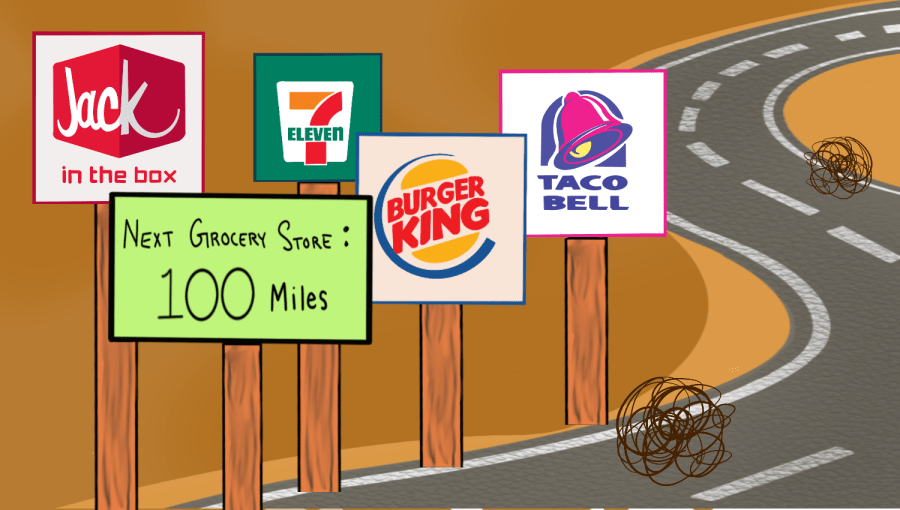
Photo Credit Jason Shan and Susanna Tang “Food deserts are classified as regions with little access to fresh produce, and they affect millions of Americans.”
When we talk about healthy food and sustainability, it is easy to say “eat better” or “support local,” but it’s not that simple. Policies play a big role in what farmers can grow and what communities can actually access.
On one hand, the USDA is investing in programs that help farmers connect to local markets. That’s important because it supports local farmers and amkes fresh food more available to communities that need it (U.S. Department of Agriculture).
But at the same time, there are funding proposals that could increase costs for farmers and cut programs that support local food systems. That makes it harder for smaller farmers to compete and can lead to higher food prices overall (“Republicans Advance Agriculture0FDA Funding Bill”)
At the end of the day, if we want better access to healthy food, especially in undeserved areas, we need policies that consistently support farmers and local food systems. Wiothout that, telling people to “eat better” doesn’t really mean much.
If you asked people around the world how we’re doing when it comes to protecting the environment, you’d probably get. a surprisingly positive answer. According to a recent Gallup poll, about 57 percent of people globally said they’re satisfied with efforts to preserve the environment, the highest level in the past 20 years (Vigers).
At first, that sounds like a win. But here’s the thing, it doesn’t fully match reality. While people feel progress is being made, issues like rising global temperatures, declining wildlife populations, and ongoing deforestation remain very real. (Gallup). It’s likely we’re feeling better about the situation, but it hasn’t caught up with us yet. And that disconnect really matters.
A lot of this optimism seems tied to how people view their governments. When trust in leadership is higher, people are more likely to believe environmental efforts are working even if the data says otherwise (Vigers). So, in a way, perception is being shaped more by confidence than by actual environmental outcomes.
For example, in Pennsylvania, the state recently invested about $500,000 into urban agriculture projects to help communities grow fresh food in cities (Shapiro-Davis Administration). This isn’t just about farming, it’s about fixing bigger issues like food deserts, access to healthy options, and even job opportunities. These grants are helping communities address real barriers such as poor soil quality, lack of land, and limited resources, while also creating pathways for economic growth and sustainability. (Sahpiro-Davis Administration).
To me, this shows that while people may feel hopeful, real change comes from tangible efforts. If we want a better future, we need more action, not just optimism.
Works Cited
Vigers, Benedict. “World More Satisfied With Efforts to Preserve Enviornment.” Gallup, 16 Apr. 2026
“Sahpiro-Davis Administration Invests $500,000 to Support Urban Farmers and Break Down Barriers to Accessing Fresh Food in Cities Across Pennsylvania,” Farms.com, 17 April. 2026
Photo Credit Baker Institute Center for Health Policy
The way kids eat today doesn’t just affect them right now, it shapes thier health long term. When healthy habits aren’t built early, it can lead to bigger issues down the line, and for many families, that’s not always something they can control.
Research from the Baker Institute shows that students in Houston schools are eating fewer fruits and vegetables, skipping meals, and getting less physical activity than recommended (Kulesza et al.). These patterns are linked to higher obesity rates and increased health risks, which can carry into adulthood. But this isn’t just about individual choices, it reflects larger issues like food insecurity and limited access to healthy options.
In many low-income communities, fresh food is either too expensive or not easily available, making processed food the more realistic option. Efforts to improve access, like programs that make fruits and vegetables more affordable, are helping families move toward healthier habits (Li).
If we want better outcomes for future generations, we have to start by making healthy living more accessible today.
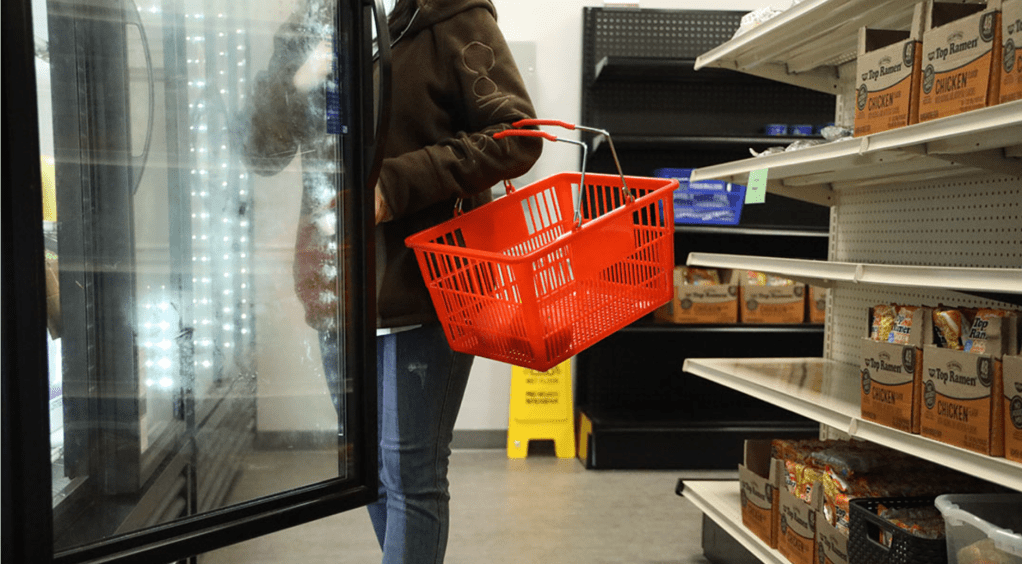
We hear “eat healthier” all the time, but for people in food deserts, that’s easier said than done. Fresh fruits and vegetables can be expensive, hard to find, or just not available. Even when we know what’s healthy, barriers like cost, time, and lack of cooking skills make it tough to follow through.
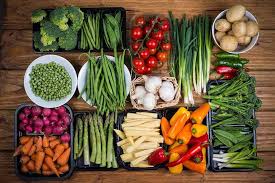
A recent Los Angeles Times piece points out that over half of the calories Americans eat come from ultra-processed foods, which are cheaper and more convenient than fresh produce (Popet). Carbs and processed foods are dirt cheap, while organic vegetables can be expensive, making it harder for families to prioritize healthy meals. Policy changes like subsidies for fresh produce, incentives for urban farms, or programs to make organic options more affordable can help level the playing field and make nutritious choices realistic for everyone. That’s especially true for kids and families in urban neighborhoods with limited grocery options.
This is where urban gardens can make a real difference. Growing fruits and veggies locally, at schools, community lots, or rooftops, gives people direct access to fresh food and a chance to learn how to cook it. Research in Science shows that paring hands on experiences like cooking or gardening with nutrition education improves diet quality and helps people actually make healthier choices, not just know what they should eat (Yang et al)
Urban Gardens aren’t just about food, they’re about giving communites the tools to eat better, build skills, and make healthy habits stick. Nutrition advice is one thing but making healthy eating possible is what really changes lives.
What if solving food deserts wasn’t just about adding more grocery stores, but about smarter policies working together with real community solutions?
That’s what I kept thinking about after reading about new legislation in New York and a local farming initiative in Columbus. Both show that improving access to fresh food isn’t just an idea anymore, it’s actually happening. There’s a push right now for something called the Fresh Communities Act, and it shows that lawmakers are starting to take food access more seriously (New York State Senate, 2026). The goal is to bring more locally grown fresh food into underserved communities while also supporting local farmers. Instead of relying only on big grocery chains, it focuses on smaller, community-based solutions that bring food directly to people who need it most. That matters because it actually addresses the real issue, which is access, affordability, and the systems behind it (New York State Senate, 2026).
But policy alone isn’t enough. That’s where community work really comes in.
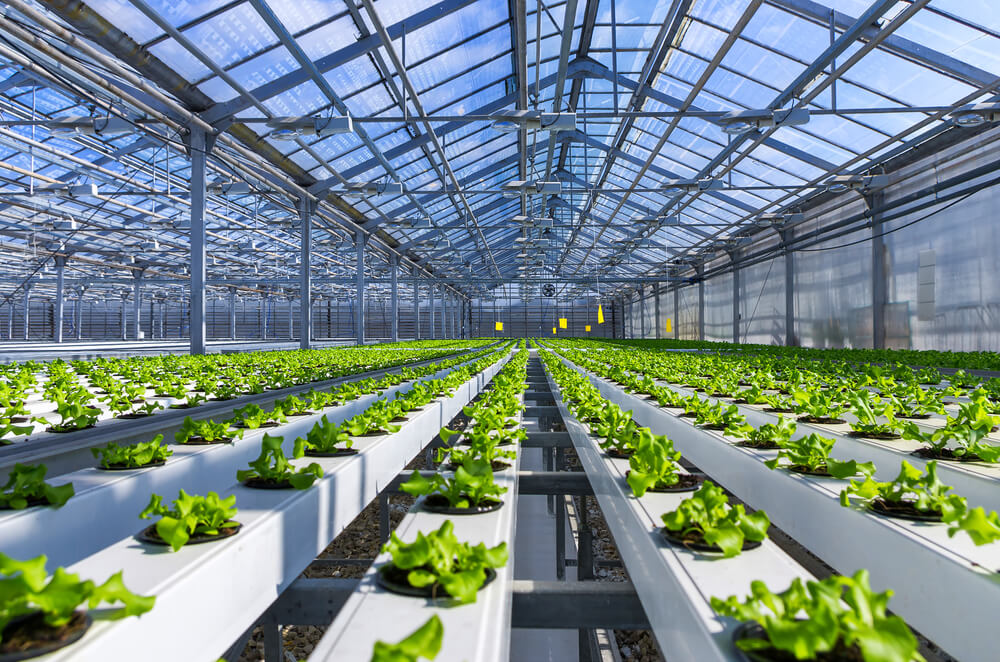
In Columbus, there’s a hilltop hydroponic farm that’s doing more than just growing food, it’s teaching people too (Converse, 2026. They use hydroponics, which means growing plants without soil, and they’re able to produce fresh vegetables year round right in the city. Even more important, they are educating students about food, sustainability, and health (Converse, 2026). It’s not just about feeding people; it’s about giving them knowledge and control.
What stood out to me is how these two things connect. The fresh Communities Act helps create the support and funding, while projects like the hydroponic farm show what that actually looks like in real life. One works from the top down, the other from the ground up, but you need both.
And honestly, this hits close to home. In places like PG county, access to fresh food is still uneven. A lot of neighborhoods still depend on corner stores or fast food. Seeing both policy changes and real community solutions makes it feel like there’s a path forward.
At the end of the day, solving food insecurity isn’t about one fix. It’s about policy, education, and community all working together. When those things line up, we get closer to a system where healthy food isn’t something extra, it’s something everyone has.
What if the best presciption a doctor could write wasn’t for a pill, but for fresh vegetbales? For millions living in food deserts, this idea is becoming reality through the “food is Medicine” movement.
This systemic failure drivers diet related disease costing Americans 1.1 trillion annually to treat. That’s why a major legislative development caught my attention. This week, Representatives Robin Kelly (D-IL) and Jen Kinggans (R-VA) reentered the FOOD for Health Act, bipartisan legislation supporting Food is Medicine programs nationwide (“Rep. Kelly Reintroduces”)
The bill would authorize $20 million through 2031 for produce prescriptions, on site food panties at hospitals, and medically tailored meals. As Kelly stated: “Many constituents live closer to a fast food restaurant than a grocery store. The best medicine is prevantive medicine, and that include food”
Organizations like Dion’s Chicago Dream, which delivers fresh produce direclty to households, endorse the bill. Founder Dion Dawson noted: ” When fresh, nutritious food is integrated into care, lives change” (“Rep. Kelly Reintroduces”)
For those in PG County, watching this legislation emerge gives hope. We need both systemic policy and local resilience to build a just food system where fresh food is a right, not a privilege.
“Rep. Kelly reintroduces Bipartisan Legislation to Improve Access to Healthy, Nutritios Food.” U.S. House of Representatives, 12 Mar. 2026, robinkelly.house.gove/media-center/press-releases/rep-kelly-reintroduces-bipartisan-legilation-imporve-access-healthy.
What determines whether a neighborhood has access to fresh, healthy food? Is it location, economics, or something deeper rooted in history and policy? In many communities across the United States, the answer is tied to environmental injustice. Access to quality food isn’t distributed equally, and the places where grocery stores invest, or choose not to invest, often reflect long standing social and economic disparities.
My name is Mikias Eticha and in this blog, I explore the reality of food deserts and environmental injustice through the lens of my own experience living in Prince George’s Country, Maryland. From noticing the differences in grocery stores just a short drive apart to examining policies that shape food access across the country, this blog looks at how systemic issues affect what food reaches our communities.
I will also discuss how urban agriculture and policy solutions can help address these inequalities. By looking at local experiences alongside national examples, the goal of this blog is to highlight why fair access to fresh, affordable food matters, and what steps communities and policymakers can take to create a more just and sustainable food system.
Living in PG County, the fight for fair access to fresh, affordable food feels personal. You don’t have to read a report to see the disparity; you just have to drive. I’ve experienced the produce difference firsthand: the Costco in Brandywine, MD, just doesn’t compare to the one in Pentagon City. Up in Arlington, the shelves are stocked with a wider variety of organic produce, and the surrounding area is dense with Whole Foods, and Trader Joe’s. Here in PG County those options are sparse. The only common denominator? Demographics. PG county has a larger Black community, and the lack of investment in our grocery infrastructure is a glaring example of environmental injustice.
This isn’t just about inconvenience; it’s about a system that tilts the scale against communities of color. That’s why a recent legislative move in New York caught my attention. According to the Institute for Local Self Reliance, the New York State Assembly is advancing the Consumer Grocery Pricing Fairness Act. This bill aims to stop price discrimination. A predatory practice where giant chains can bully suppliers for lower prices, squeezing independent grocers and raising costs for everyone else (“New York Advances”) If we had stronger protections like this in Maryland, maybe we could support the small markets that have served our neighborhoods for generations, instead of watching them get pushed out by corporate consolidation.
We see the fallout of this broken system nationwide. In Columbia, South Carolina, food insecurity has spiked to nearly 14.4% surpassing the national average. As Cindye Richburg-Cotton, executive director of the Brookland Lakeview Empowerment Center, “abundance of unhealthy stores” (Bramlett). This is exactly what we face in parts of PG County. We nee systemic change. While I’ll keep advocating for local solutions and urban agriculture to feed our community, we also need the legal tools to fight the corporate gatekeepers who control what food reaches our tables.