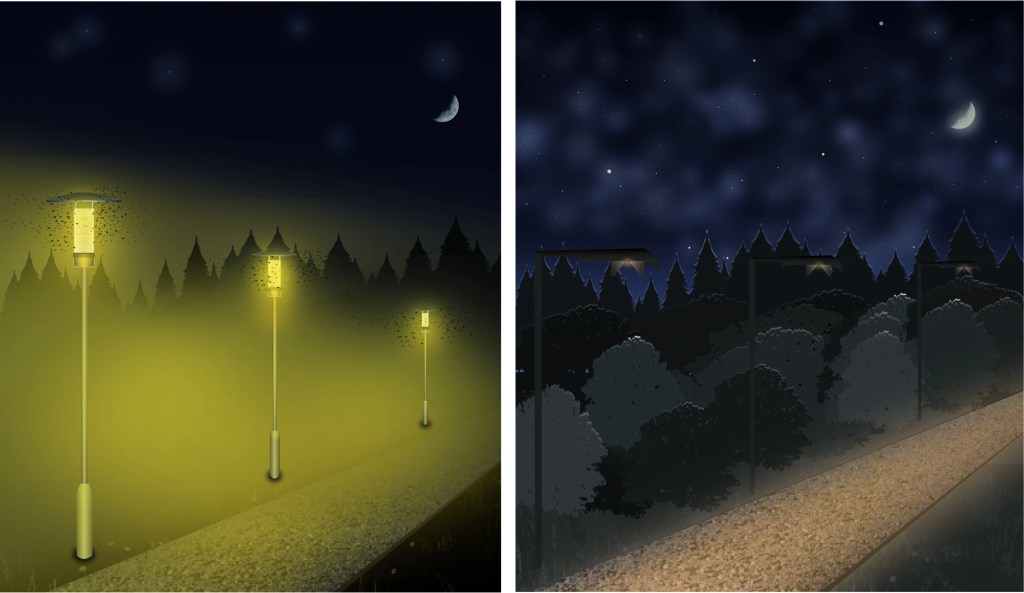
For eons, the “biological clock” of the Earth was set by the rising and setting of the sun. But today, Artificial Light at Night (ALAN) is rewriting that rhythm with startling consequences. Recent studies from 2025 and 2026 have moved beyond “losing the stars” to reveal how light pollution is fundamentally altering our climate and our cardiovascular health.
1. A New Driver of Climate Change
We usually think of light as energy-intensive, but new research shows it’s also a carbon cycle disruptor.
- The Respiration Gap: A major 2025 study in Nature Climate Change discovered that ALAN is silently reshaping the carbon balance of entire continents. By tricking plants and soil microbes into staying active at night, it increases “ecosystem respiration”—the release of $CO_2$—without any corresponding increase in photosynthesis.
- The Result: Brighter nights mean ecosystems store less carbon, potentially accelerating the very warming we are trying to prevent.
2. The “Permanent” Allergy Season
If your seasonal allergies feel like they’re starting earlier and lasting longer, light pollution might be to blame.
- The PNAS Nexus Study (2026): Researchers found that ALAN is a critical driver of “urban growing seasons.” In the Northeastern U.S., higher light exposure is now significantly linked to an earlier start and a much later end to the pollen season.
- The “Fall Delay”: While warmth triggers spring buds, it is the darkness of autumn that usually tells plants to stop producing pollen. ALAN masks that cue, keeping allergenic plants “awake” and pumping out pollen for up to two weeks longer than in dark rural areas.
3. A Novel Risk Factor for the Heart
The medical community is now treating ALAN as more than just a sleep disturber; it is being flagged as a direct threat to the heart.
- The 50% Rule: A late-2025 study from Harvard Medical School highlighted that people in the highest percentiles of nighttime light exposure have a 30% to 50% increased risk of heart attack and stroke.
- The Mechanism: It’s not just about tired eyes. Exposure to light between midnight and 6:00 AM triggers a stress response in the brain, which inflames the arteries and hardens blood vessels over time.
What Can We Do?
The power of ALAN as a pollutant is that it is instantly reversible.
- Shielding: Ensure outdoor lights face down, not out or up.
- Warmth: Use LEDs with a color temperature below 3000K (amber/warm tones) to minimize biological disruption.
- Smart Sensors: Use motion detectors so light is only present when human activity requires it.
Source Link: Nature Climate Change: Widespread influence of artificial light at night on ecosystem metabolism (2025)
 Writing About the Environment
Leave a comment