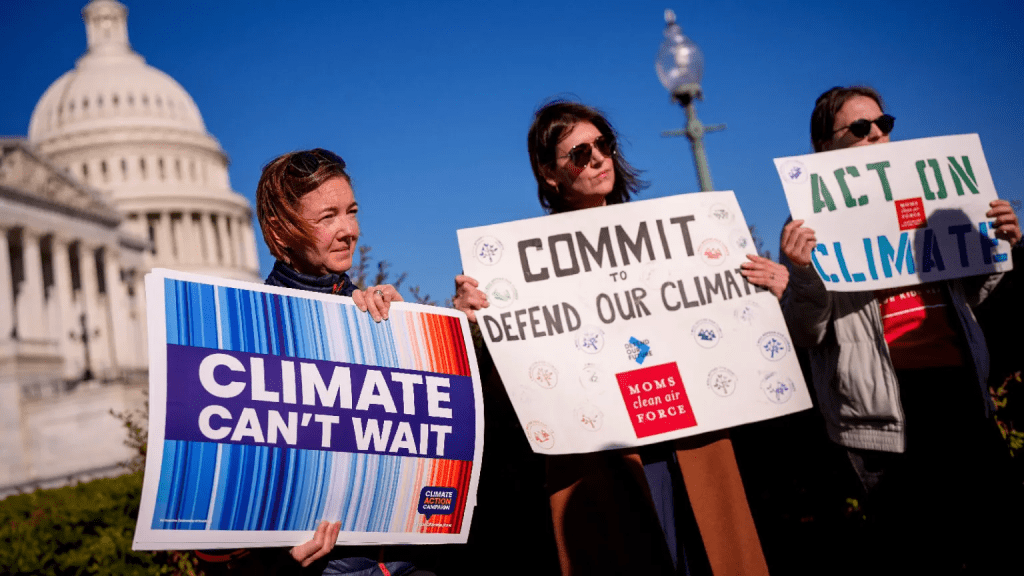
There is a growing perception among cities that the battle against climate change may already be lost. Instead of focusing on reducing emissions, billions of dollars are being directed toward strategies to mitigate the effects of climate change. This includes constructing flood walls instead of solar panels and making zoning changes rather than establishing electric bus depots. This trend indicates a shift from preventing climate disasters to simply surviving them. But does this imply a defeatist attitude, or is it simply the result of practical and strategic planning?
To better understand this issue, let’s look at Florida, which is home to the Resilient Florida program. This initiative has thrived despite a political environment that is frequently skeptical of climate-related efforts.
The Program That Would Not Die
Florida Gov. Ron DeSantis has made it clear that he opposes “woke” climate spending. To that end, he has formed a task force akin to Elon Musk’s “DOGE,” which is tasked with identifying climate-related programs that should be eliminated. This task force recently issued a report criticizing local climate initiatives such as the purchase of electric vehicles and the hiring of sustainability officers, calling them irresponsible.
However, an interesting development has emerged. According to a report published by Grist and Yale Climate Connections on March 2, 2026, Florida’s largest climate resilience program, Resilient Florida, will not face budget cuts. In fact, it has secured a permanent funding source and will receive $150 million next year. What could be the key to their success? The program prioritizes financial stability and the preservation of essential services over polar bears and carbon footprints.
Impact of Funding
Resilient Florida is more than just an abstract initiative; it funds specific, critical projects that address pressing issues. These projects include developing living shorelines to combat erosion at a naval base in Pensacola, elevating an entire island park in Palm Beach County to protect against rising sea levels, building a $30 million storm drainage system on a road that floods during heavy rains, and installing underground drainage pipes in the Florida Keys to prevent seawater from infiltrating homes during high tides.
This approach demonstrates adaptation in its most fundamental form. The goal is not to stop rising tides or reverse climate change, but to keep roads dry and sewage treatment plants operational. As Jim Mooney, a Republican state legislator from the Keys, wisely remarked, “That’s what you’re collecting people’s property taxes for… to get that stuff done.”
Are Cities Quietly Giving Up on Mitigation?
This raises a critical question. Examining Florida alone, it appears that the answer is “yes,” as the state prioritizes storm drains over emission reductions.
However, experts believe that the program’s ongoing success is driven by a more compelling rationale. According to Mathew Sanders of the Pew Charitable Trusts, Florida’s economy, which is based on tourism, beaches, and property values, relies on an intact coastline. If roads wash out and beaches erode, the financial benefits will be significantly reduced. This is not just about climate belief; it is also about economic survival. The transition is not simply from mitigation to adaptation; rather, adaptation is the only type of climate action that can thrive in areas where political support for other strategies is lacking. While other states and the federal government cut resilience funding, Florida makes critical investments. In contrast, Louisiana’s new governor recently cancelled a major coastal restoration project. The distinction is based on the immediate economic consequences of failing to adapt in Florida, which are too significant to ignore.
It is truly concerning to witness this situation. We need both mitigation (addressing the underlying causes) and adaptation (managing the consequences). However, in places like Florida, adaptation is the only viable option at the moment. Cities did not simply choose survival over prevention; in many red states, prevention was never considered a politically viable option.
So, are these states admitting defeat? Possibly. More likely, they are making the most of their situation. They are building sea walls because they can be funded and publicly displayed, allowing officials to confidently state, “This protects your home.” Unfortunately, this message is often more powerful than, “This will save the planet in 30 years.”
The harsh reality is that, while we build these barriers, we continue to emit carbon into the atmosphere. Ultimately, those walls may not provide adequate protection in the long term.
Source:
- Grist / Yale Climate Connections. (2026, March 2). A massive climate resilience program is escaping Florida’s DOGE purge. https://yaleclimateconnections.org/2026/03/a-massive-climate-resilience-program-is-escaping-floridas-doge-purge/
- “Resilient Florida Program | Florida Department of Environmental Protection.” Floridadep.gov, 2025, floridadep.gov/rcp/resilient-florida-program .
 Writing About the Environment
Leave a comment