Collin Bomysoad
Our Chesapeake Bay health can be reflected in the agricultural practices we employ in close proximity to the bay. Poor agricultural practices lead to nutrient runoff into the bay, resulting in eutrophication that harms the local environment and economy. The runoff from agricultural practices, mainly from farms, is detrimental to the bay’s health, causing eutrophication. Eutrophication leads to a lack of nutrients in the bay, causing fish and plants to suffer greatly. The bay can become an ecological dead zone.
Watch this video on:(176) What is eutrophication? – YouTube. This gives a quick overview on eutrophication and its disastrous effects.
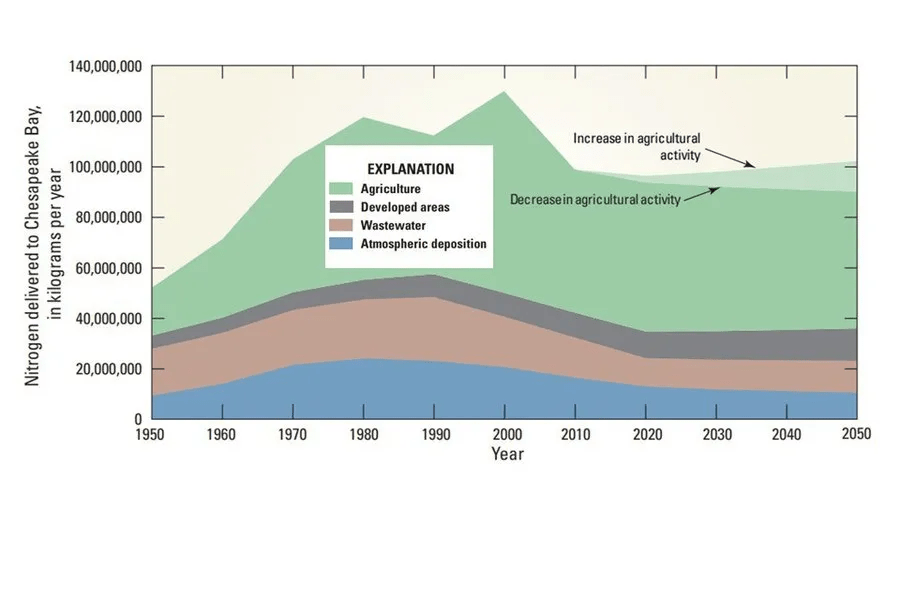
This figure found on Penn State’s website shows the trend of nitrogen delivered into the bay between the years 1950 and 2050. It also shows how much we can decrease with our efforts or the increase in our poor agricultural practices.
Nitrogen, phosphorus, and sediment enter the Chesapeake through agricultural runoff. This causes a dip in the bay’s health, which not only harms the biodiversity of the bay, but talso hose who make a living off the bay.
Source Links:Nitrogen in the Chesapeake Bay – How are We Doing?, (176) What is eutrophication? – YouTube
 Writing About the Environment
Leave a comment