Have you ever paid more for a product labeled “carbon neutral”? Everyone who cares about the environment has paid more for ‘carbon neutral’ products while assuming that this has been independently verified. Often, this is not the case. Companies practice “corporate green washing”, sending out claims about environmental impact that have not been checked, so they can gain eco-conscious buyers. This practice has grown along with the growth of consumer demand for eco-friendly products. Sadly, the current regulations are not up to date.
Corporate Greenwashing and Consumer Deception: What’s Actually Happening
Greenwashing occurs when a company, without any proof or verification, claims in its marketing that its products are environmentally friendly. Examples can include “carbon neutral”, “green,” and “sustainable,” which can be used without any legal repercussions or independent verification. No company is required to verify the accuracy of these claims when they are placed on a label.
How Widespread is the Issue?
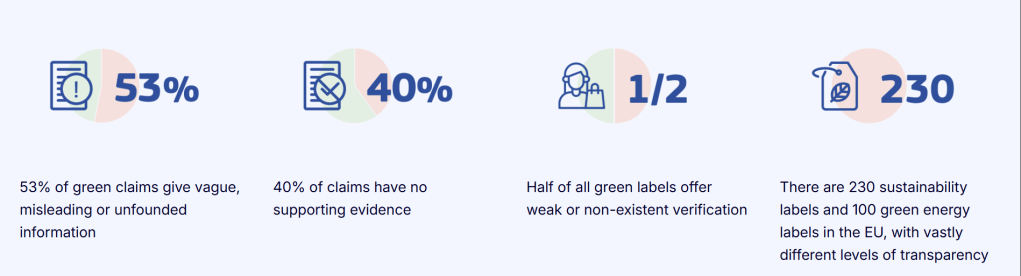
According to the European Commission, regarding labels on products claiming they are eco-friendly, 53% give out “vague or misleading information, 40% have no supporting evidence at all, and half of all green labels offer weak or nonexistent verification”. There is federal guidance in the United States for environmental marketing claims, the FTC’s Green Guides. Unfortunately, there have been only eight companies against which the FTC has taken action since 2018.
Why Has Nothing Changed?
The FTC’s Green Guides haven’t been updated since 2012. A revision was promised for 2024 and never arrived. These companies know they can say whatever they want about their products regarding environmental impacts and get away with it.
Why Should You Care?
You vote with your wallet for a more sustainable world if you are a consumer who cares about labels like sustainability or something similar. If companies lie and greenwash their products, they are trying to control your vote. Also, this punishes the companies that actually try to invest in sustainability. This blog, over the next few weeks, will go even deeper into this topic and expose the companies that participate in greenwashing the most and how we could hold them accountable.
 Writing About the Environment
Leave a comment