For the following weeks, my blog posts will be discussing the Nigerian oil industry and its short-term and long-term effects on the Nigerian environment. This week’s post, I’ll be giving an overview of one of Nigeria’s well-known public emergencies: the 2011 Oil Spill, and summarizing the impacts it had on the environment and what current discussions are taking place.
Overview
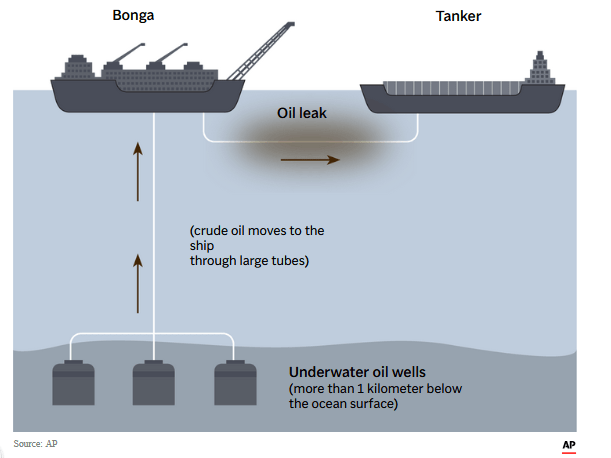
On December 20, 2026, a pipe from Shell’s production ship/oilfield Bonga leaked to a tanker. The leak would go unnoticed for four hours, after 40,000 barrels of oil had spilled into the Atlantic, tainting almost all of the coastal region of Ogoniland’s water (Davey, par. 2). This is just one of the several spills the area has experienced over the decades.
AP depiction of oil spill, 2025, AP News, https://apnews.com/article/oil-spill-shell-nigeria-bonga-energy-pollution-67628bf451ee543ec3a2444617c5eca1
Lasting Impacts and Current Events
The Ogoniland people still feel the effects to this day. Drinking from the contaminated water has lead multiple health complications and a rising death toll among locals in the past years (EHN, par. 4). Shell is also dealing with a consequence like the 2022 review that found the issues with the same systems involved in the oil spill (Davey par. 5). Prominent issues included corrosion, inadequate firefighting protocols, and “lack of clear and established standard and processes” (Davey, par. 5). The Shell company responded saying accidents on the Bonga have only been a decline of since 2018. Oil spills specifically dropped by 90%.
References
https://apnews.com/article/oil-spill-shell-nigeria-bonga-energy-pollution-67628bf451ee543ec3a2444617c5eca1
https://www.insurancejournal.com/news/international/2025/04/04/818401.htm
 Writing About the Environment
Leave a comment