When examining how Artificial Intelligence is being integrated into our lives and jobs, it becomes clear that certain citizens are affected more than others. According to a recent CNBC article, President Trump and his administration have noted that energy consumption and prices are soaring. While the administration has stated they are working with top companies to ensure that the massive data centers being built on new plots of land will not negatively impact the public’s energy and water supply, the reality on the ground is different.
The White House has stated they will require these companies to independently fund and provide their own energy sources. However, the financial impact is already being felt: ‘Electricity prices are forecast to rise 6% through 2026 and another 3% in 2028 as data center demand grows more rapidly than power supply, according to a Goldman Sachs report.’ Across the U.S., cities are already experiencing spikes in utility bills following the addition of these facilities.
Because the push for AI is driven by large corporations and supported by the current administration, many states want to welcome the positive impacts of AI. Yet, a significant question remains: who is going to fund them? This has created a divide over land acquisition, especially regarding vacant strip malls or former business hubs. Our state’s energy grids thrive on high traffic areas like food, clothing, and service hubs that generate local economic activity. When these are replaced by data centers that require massive upkeep and strain the grid, the cost burden often falls on surrounding homeowners rather than those reaping the monetary rewards.
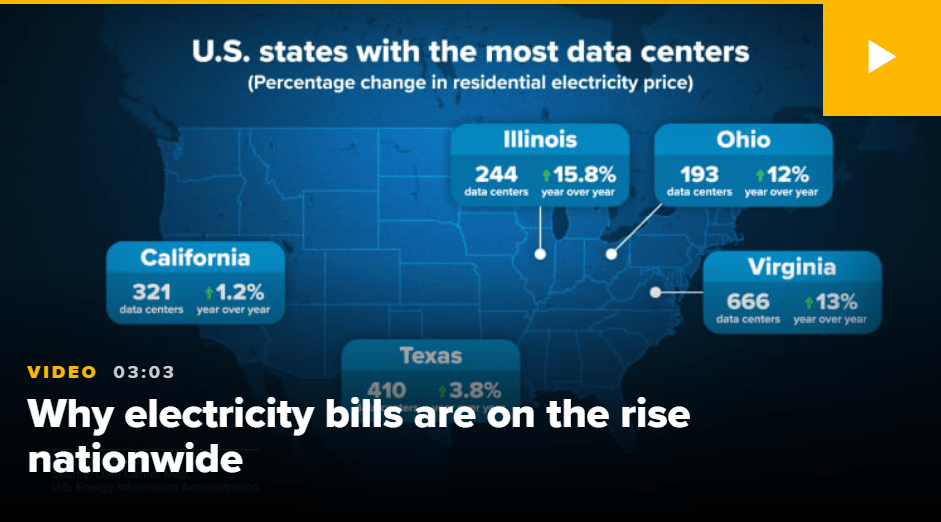
Nationwide increase in energy bill, are centers requiring too much?
As we look at the negative effects of AI-centred and othere form of digital infrastructure, we are also confronted with people believing that there is good use of it. With the integration of software and AI assistance, the real estate world is looking to integrate AI as a form of security for those who own properties.
Key Words : Energy Consumption, Grid Use
Source: Real Estate Integration
 Writing About the Environment
Leave a comment