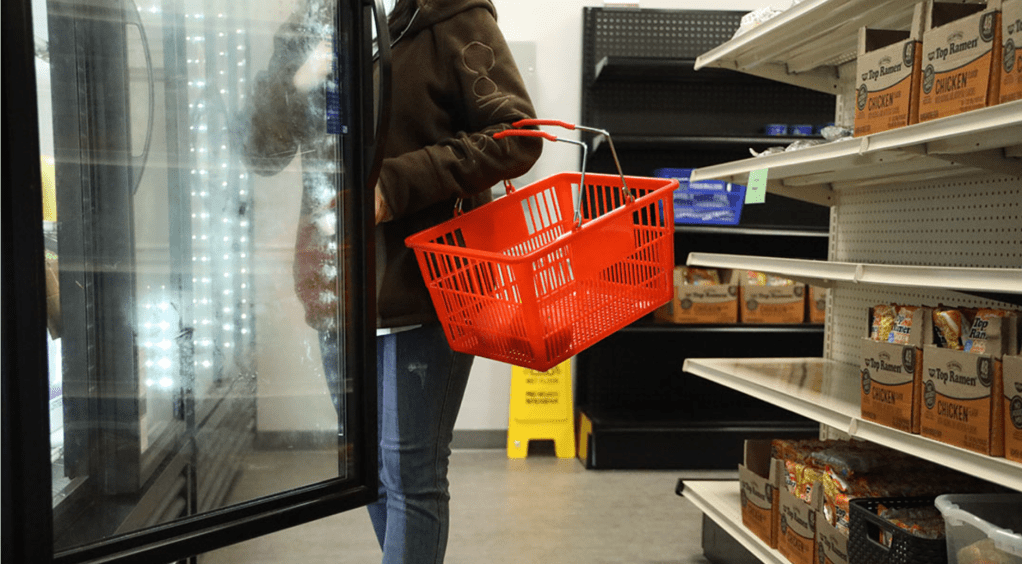
Photo by Riley Mekanik/The Carolina Reporter

What determines whether a neighborhood has access to fresh, healthy food? Is it location, economics, or something deeper rooted in history and policy? In many communities across the United States, the answer is tied to environmental injustice. Access to quality food isn’t distributed equally, and the places where grocery stores invest, or choose not to invest, often reflect long standing social and economic disparities.
My name is Mikias Eticha and in this blog, I explore the reality of food deserts and environmental injustice through the lens of my own experience living in Prince George’s Country, Maryland. From noticing the differences in grocery stores just a short drive apart to examining policies that shape food access across the country, this blog looks at how systemic issues affect what food reaches our communities.
I will also discuss how urban agriculture and policy solutions can help address these inequalities. By looking at local experiences alongside national examples, the goal of this blog is to highlight why fair access to fresh, affordable food matters, and what steps communities and policymakers can take to create a more just and sustainable food system.
Living in PG County, the fight for fair access to fresh, affordable food feels personal. You don’t have to read a report to see the disparity; you just have to drive. I’ve experienced the produce difference firsthand: the Costco in Brandywine, MD, just doesn’t compare to the one in Pentagon City. Up in Arlington, the shelves are stocked with a wider variety of organic produce, and the surrounding area is dense with Whole Foods, and Trader Joe’s. Here in PG County those options are sparse. The only common denominator? Demographics. PG county has a larger Black community, and the lack of investment in our grocery infrastructure is a glaring example of environmental injustice.
This isn’t just about inconvenience; it’s about a system that tilts the scale against communities of color. That’s why a recent legislative move in New York caught my attention. According to the Institute for Local Self Reliance, the New York State Assembly is advancing the Consumer Grocery Pricing Fairness Act. This bill aims to stop price discrimination. A predatory practice where giant chains can bully suppliers for lower prices, squeezing independent grocers and raising costs for everyone else (“New York Advances”) If we had stronger protections like this in Maryland, maybe we could support the small markets that have served our neighborhoods for generations, instead of watching them get pushed out by corporate consolidation.
We see the fallout of this broken system nationwide. In Columbia, South Carolina, food insecurity has spiked to nearly 14.4% surpassing the national average. As Cindye Richburg-Cotton, executive director of the Brookland Lakeview Empowerment Center, “abundance of unhealthy stores” (Bramlett). This is exactly what we face in parts of PG County. We nee systemic change. While I’ll keep advocating for local solutions and urban agriculture to feed our community, we also need the legal tools to fight the corporate gatekeepers who control what food reaches our tables.
References
Bramlett, Matthew. “Food Insecurity Rises in Midlands on USC’s Campus” Carolina News and Reporter, 2026, https://carolinanewsandreporter.cic.sc.edu/food-insecurity-rises-in-midlands-on-uscs-campus/
“New York Advances Crucial Grocery Fairness Bill. “Institute for Local Self-Reliance,” https://ilsr.org/article/independent-business/new-york-advances-crucial-grocery-fairness-bill/
Image:https://carolinanewsandreporter.cic.sc.edu/food-insecurity-rises-in-midlands-on-uscs-campus/
 Writing About the Environment
Leave a comment